Research & Analysis

China’s Economy Resilient in Q1, Iran Conflict Clouds the Outlook
Member Exclusive

China’s Economy Resilient in Q1, Iran Conflict Clouds the Outlook

According to official government data, China’s real GDP grew 5% year-on-year in the first three months of 2026 to 33.42 trillion yuan ($4.9 trillion), beating expectations and reversing the downward trend seen in the second half of 2025. Strong industrial output and foreign trade drove growth, but weak demand weighed on overall activity and clouds the outlook for the rest of the year.

Publications

China Market Intelligence

China Market Intelligence

Member Exclusive
Short takes on policy and regulatory actions that impact the business environment.

See the articles

Washington Update

Washington Update

Member Exclusive
Weekly recaps of every noteworthy development in the US legislative and executive branches.

See the articles

Filters

Close

Filter By

Topic
Format
Publication
Date

through

47 Results Clear Filters

2912 Results

What Agentic AI Means for Foreign Firms’ Strategies in China
Member Exclusive

What Agentic AI Means for Foreign Firms’ Strategies in China

During this year’s Spring Festival, Alibaba launched a three-billion-yuan subsidy campaign to accelerate adoption of its AI chatbot, Qwen. Users could instruct Qwen to order a bubble tea for 0.01 yuan directly within the chat interface. The company has also integrated its major services, including e-commerce, travel, navigation, and grocery shopping, into Qwen, allowing users to complete everyday tasks through a single conversational entry point.

China Market Intelligence Wenqing Ge
China’s Cybersecurity Landscape in 2026: Three Key Trends
Member Exclusive

China’s Cybersecurity Landscape in 2026: Three Key Trends

China entered 2026 with clear goals for its digital economy: accelerate capability while tightening oversight. Three recent regulatory updates illustrate this shift. First, the revised Cybersecurity Law (CSL), which took effect on January 1, consolidates cybersecurity and AI under one governance framework, expanding the law’s scope and strengthening penalties.

Third-Country Agreements on Reciprocal Trade Aim to Counter China
Member Exclusive

Third-Country Agreements on Reciprocal Trade Aim to Counter China

President Donald Trump is attempting to reshape the global economic order by moving away from traditional free trade agreements toward bilateral Agreements on Reciprocal Trade (ARTs). These agreements, initiated after the imposition of sweeping “Liberation Day” tariffs last year, ostensibly aim to open new markets for US exports, reduce foreign tariffs and non-tariff trade barriers, and spur alignment with US economic and national security measures.

Unpacking China’s Local Government Debt
Member Exclusive

Unpacking China’s Local Government Debt

USCBC interviews Victor Shih, director of the 21st Century China Center at UC San Diego, on the factors behind China’s rising local government debt, where efforts to resolve the debt stand, and considerations for multinational firms.

Interview Nathaniel Davis
Bilateral Trade Detente Remains Stable After Supreme Court Strikes Down Trump’s Tariffs
Member Exclusive

Bilateral Trade Detente Remains Stable After Supreme Court Strikes Down Trump’s Tariffs

The Supreme Court last Friday ruled six-to-three against President Donald Trump’s use of the International Emergency Economic Powers Act (IEEPA) to impose tariffs on global trade partners. The Trump administration complied with the decision and on Tuesday began imposing a new 10% global tariff using Section 122 of the Trade Act of 1974. The change provides relief to China, which previously faced an IEEPA rate of 20% (10% reciprocal, 10% fentanyl). The ruling did not address the question of tariff refunds, which is likely to be handled by lower courts.

Washington Update USCBC Government Affairs
Semiconductor Sourcing Rules, 1260H Confusion, and Rubio-Wang Yi Warnings
Member Exclusive

Semiconductor Sourcing Rules, 1260H Confusion, and Rubio-Wang Yi Warnings

The Federal Acquisition Regulatory Council (FAR) on Tuesday proposed a new rule that would require federal contractors to certify that their products do not contain certain covered semiconductor products linked to foreign adversaries starting in December 2027.

Washington Update USCBC Government Affairs
DOD’s Chinese Military Companies List Poised for Greater Regulatory Importance
Member Exclusive

DOD’s Chinese Military Companies List Poised for Greater Regulatory Importance

The Department of Defense’s 1260H list — often referred to as the Chinese Military Companies (CMC) list — is back in the spotlight after an updated version was abruptly removed from the Federal Register just hours after being published late last week. While it’s unclear when a list will be republished and who will be on it, companies should be aware of the list’s growing importance.

Scarce Details on Trump’s April Visit, Khanna Blasts Admin’s China Policy, and Iran EO Opens Door for China Tariffs
Member Exclusive

Scarce Details on Trump’s April Visit, Khanna Blasts Admin’s China Policy, and Iran EO Opens Door for China Tariffs

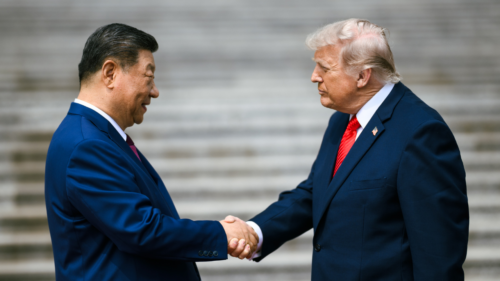
President Donald Trump will visit China the first week of April to meet with President Xi Jinping, Politico reported on Monday. With just a month and a half to go, the administration’s specific objectives for the trip remain unclear. Trump said last week that he had spoken with Xi about renewed commitments to purchase US energy and potentially agriculture, offering no additional information.

Washington Update USCBC Government Affairs
China’s Tax Governance Enters New Phase with Enactment of VAT Law
Member Exclusive

China’s Tax Governance Enters New Phase with Enactment of VAT Law

China has taken a significant step in modernizing and standardizing its tax policy. On January 1, the Value-Added Tax (VAT) Law came into effect after being passed by the National People’s Congress in December 2024. VAT, a consumption tax based on the value added to goods and services at each stage of production and distribution, is China’s largest single source of tax revenue and accounted for 39% of total national revenue in 2025.

China’s Revised Foreign Trade Law Strengthens Legal Foundation for Countermeasures
Member Exclusive

China’s Revised Foreign Trade Law Strengthens Legal Foundation for Countermeasures

Late last year, China’s National People’s Congress passed the most significant revisions to the Foreign Trade Law in two decades. While nothing directly signals more frequent use of these tools against US companies in the short term, China will be equipped to respond decisively if trade negotiations are derailed.