US-China Flights: A Stalled Recovery
Over six years since the COVID-19 pandemic caused a sharp drop-off in direct flights between the United States and China, flights remain at only a third of their 2019 level.

This tracker monitors direct diplomatic interactions between the United States and China, documenting high-level meetings, phone calls, and official visits between American and Chinese government officials, starting with the second Trump administration.
Over six years since the COVID-19 pandemic caused a sharp drop-off in direct flights between the United States and China, flights remain at only a third of their 2019 level.

Tuesday’s midterm elections left Democrats in firm control of both chambers of Congress. As of this publication, Democrats hold 54 of 100 Senate seats and 253 of 435 House seats. While President Donald Trump has executive power on his side, Democrats will aim to thwart some of his ambitions.
The Treasury Department last Thursday proposed a rule to significantly expand the outbound investment security program, prohibiting investment in Chinese and other covered foreign entities that develop biotechnology or “super intelligence” systems, among other technologies. The rule would implement the Comprehensive Outbound Investment National Security (COINS) Act passed by Congress in 2025 to restrict investments in key foreign technologies.
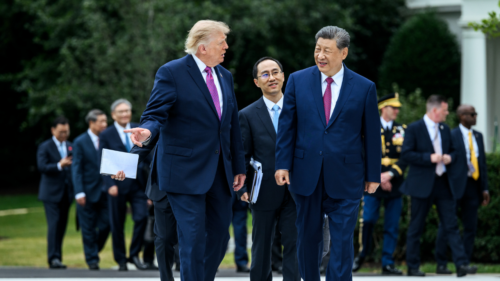
Almost a month after President Xi Jinping’s state visit to the United States, many details around any deal and its implementation remain unclear. Here’s what we do know.
Americans’ views of China are becoming more favorable, albeit from a low baseline, according to national polls. The shift appears to be sustained rather than short-term, with younger Americans more open to cooperation with China than older Americans. This year alone, however, Congress has held more than 35 hearings focused on China and considered more than 120 China-related provisions across the House and Senate versions of the National Defense Authorization Act. That mismatch suggests that the bipartisan consensus on China is stronger among politicians than the general public.
On October 9, the CCP Central Committee and the State Council jointly released the Guidelines on Developing New Quality Productive Forces, outlining 19 measures that seek to translate technological innovation into higher productivity and industrial upgrading.
American exports to China plummeted in 2025. The plunge was the result of unprecedented tariffs in place for most of the year. China’s retaliatory tariffs impacted all product categories — especially agriculture and fossil fuels. Few regions and industries were spared from economic pain.
Trade ministers from 12 G20 countries, the EU, and Poland on Wednesday signed a US-led joint statement on addressing structural excess capacity. The statement does not directly mention China, but the sectors named in the document — autos and electric vehicles, batteries, chemicals, foundational semiconductors, and solar panels — are dominated by China. Six other G20 members, including China, did not sign.
USCBC interviews Andy Rothman, founder of Sinology LLC, on the potential for reviving consumption in China. Despite weak consumer confidence, he remains upbeat, pointing to top-level signaling and untapped spending potential.