Trump-Xi Summit Offers Initial Framework, But Implementation Remains Unclear
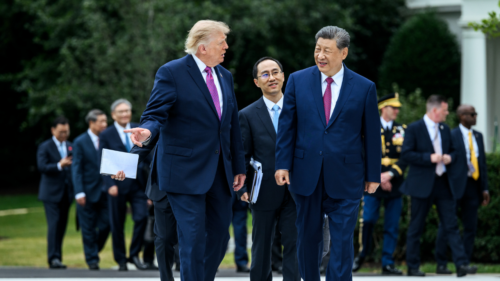
Almost a month after President Xi Jinping’s state visit to the United States, many details around any deal and its implementation remain unclear. Here’s what we do know.


Americans’ views of China are becoming more favorable, albeit from a low baseline, according to national polls. The shift appears to be sustained rather than short-term, with younger Americans more open to cooperation with China than older Americans. This year alone, however, Congress has held more than 35 hearings focused on China and considered more than 120 China-related provisions across the House and Senate versions of the National Defense Authorization Act. That mismatch suggests that the bipartisan consensus on China is stronger among politicians than the general public.
On October 9, the CCP Central Committee and the State Council jointly released the Guidelines on Developing New Quality Productive Forces, outlining 19 measures that seek to translate technological innovation into higher productivity and industrial upgrading.
The Federal Communications Commission (FCC) is becoming an active avenue for US restrictions on Chinese imports. As Presidents Donald Trump and Xi Jinping meet in Washington, the FCC’s growing actions on China shift the risk calculus for the Busan truce. While the United States may perceive import restrictions as outside the scope of the agreement reached between the countries in May 2025, China has signaled that FCC controls constitute a “serious violation.”
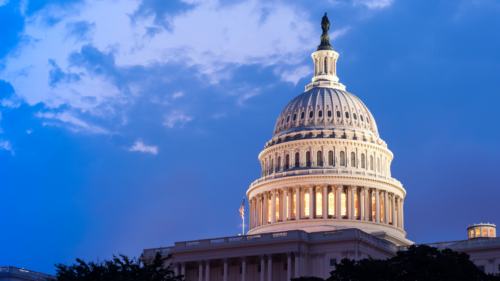
As Congress looks to complete its work before the midterm elections, USCBC members should closely monitor negotiations over the 2027 National Defense Authorization Act (NDAA), an annual must-pass bill that sets policies and funding for the Defense Department. As in recent years, Congress is using the NDAA as a vehicle to address China-related economic and national security concerns.
China’s five-year plan (FYP) to build a new energy system held few surprises, but the scale of the decades-long transformation is profound. For companies, the implementing policies that follow this and other FYPs on carbon peaking and renewable energy will be most consequential, such as new power price market reforms that impact companies’ electricity bills starting next month.
At this year’s Lujiazui Forum in Shanghai, China’s top financial regulators announced the Shanghai International Financial Center Offshore Finance Action Plan, which aims to make the RMB more usable for offshore trading, settlement, financing, and risk management.
Exports from China are facing a new threat to their competitiveness: carbon border taxes. The EU’s carbon border adjustment mechanism, which took effect in January, requires the bloc’s importers to pay for the carbon emissions of the goods they purchase. Similar legislation is set to take effect next year in the United Kingdom, and Canada, Japan, Australia, and South Korea all have carbon import taxes in the legislative pipeline.
Beijing is systematically executing its AI+ Action Plan across specific industries, with the energy sector its most recent focus. On May 8, four Chinese government agencies jointly issued the Action Plan for Promoting the Mutual Empowerment of AI and Energy, offering an early glimpse into how Beijing will operationalize its AI ambitions. In explicitly linking AI development and energy security, the document solidifies China’s strategy of embedding AI in existing industrial systems rather than treating AI as its own separate industry.
On June 1, China’s State Council released the Regulation on Outbound Investment, elevating the issue to the State Council level and expanding oversight to factor in national security, technology transfer, capital flows, and data. The new rules will take effect on July 1.