Allison Lapehn
Senior Manager, Business Advisory Services
Beijing
Senior Manager, Business Advisory Services
Beijing
Allison serves as a Business Advisory Services Manager in the Beijing office. Prior to joining the Council, she worked in policy and government affairs at AmCham China, covering the Chamber’s policy research and analysis, along with US government outreach. Allison also spent two years working in the private sector as a market entry and business development consultant for European SMEs interested in China.
Allison grew up in rural Ohio and has called Beijing home since 2017. Her interest in international politics was originally sparked by her participation in a State Department NSLI-Y exchange to Russia. While in college, she received a summer study grant to attend Renmin University’s summer program and began her study of Chinese language, politics, and culture.
Allison enjoys reading, writing, baking, and hiking with her two adopted dogs in the countryside. She holds a master’s in International Relations from Peking University and a BS in Industrial and Labor Relations from Cornell University.

On March 5, Premier Li Qiang presented the 2026 Government Work Report at the opening of the annual Two Sessions in Beijing, setting a comprehensive slate of economic and development tasks for the year. The report was released alongside a draft outline of the 15th five-year plan (FYP), which will guide economic policy through 2030.
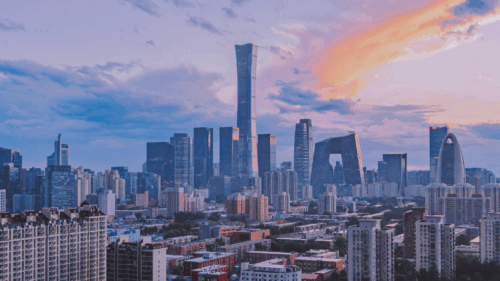
This week, China’s National Bureau of Statistics (NBS) released economic performance data for November, showing factory output and retail sales growth slowing to their weakest levels in over a year. Stubbornly low demand, a slowdown in production, and deflationary pressure coincided with a record trade surplus, which was achieved largely by frontloading exports and expanding shipments to ASEAN and EU partners amid US tariffs.

China’s stock markets have rebounded in 2025, defying expectations that global trade tensions and weak domestic economic conditions might drag on performance. The Shanghai Stock Exchange (SSE) Composite Index has risen 19.54% over the six-month period, with the China Securities Index (CSI) 300 gaining 22.41%.
In a statement released on June 6, the Shanghai Stock Exchange pledged to guide listed companies to raise the share and frequency of dividend distribution, as well as to make better use of tools such as share buybacks, M&As, and investor engagement. The SSE is hoping the moves will boost confidence in Chinese assets and make the domestic capital market more attractive for long-term investment.
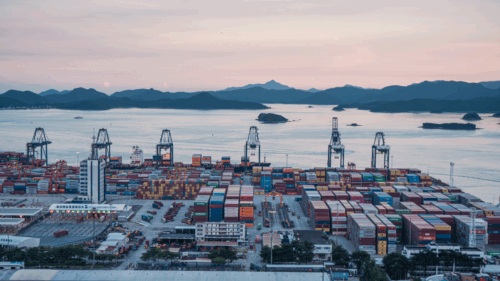
In the first half of 2025, China achieved GDP growth of 5.2% year-over-year, slightly surpassing expectations. Growth was driven primarily by exports amid a prolonged housing slump, declining industrial demand, and subdued consumer confidence.