From the first issue in 1974 and well into the 2010s, the China Business Review was an indispensable resource for businesses, researchers, and policymakers who needed a first-hand account of the challenges and the tremendous opportunities posed by the China market.
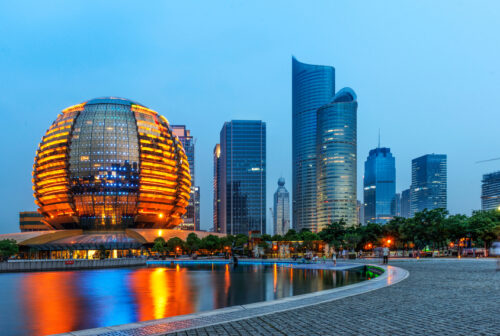
Traditionally overshadowed by metropolises such as Shanghai and Beijing, Zhejiang Province’s capital city of Hangzhou found itself in the global spotlight during the G20 Summit. To beautify the city and ease congestion for its international guests, the government shut down polluting factories, shipped away migrant workers, gave citizens vouchers to encourage vacation, and spent more than $1 billion on a new convention center.
2 WTO Complaints, 11 Raw Materials, and 1 Approaching Deadline
The European Union and the United States in July filed with the World Trade Organization (WTO) new disputes against China regarding its raw materials export duties. Both complaints claim China export duties unfairly favor Chinese industry, which is against the laws of the organization. These complaints were filed just months before the 15-year anniversary of China’s entry into the WTO, and the deadline to remove China’s non-market status. As the deadline looms, many in the United States and the EU are worried about protecting themselves from overcapacity, especially in steel.
China Business Review (Archive Only)
Nicole Golliher
VIDEO: The Role of NGOs in Cultural Heritage Conservation
Heritage preservation has long been associated with the conservation of grand monuments driven by the state, but Kuanghan Li, director of Global Heritage Fund’s China Program, explains to Asia Society that NGOs could play the role of instigator and facilitator in heritage preservation projects.
Winning the War for Talent in China’s “New Normal”
China’s economy is changing rapidly thanks to the growing purchasing power of the expanding middle class and the digital disruption of multiple sectors. It is little wonder that competition for top Chinese talent—especially in fast-growing China-based companies—is becoming ever more intense. MNCs that can build strong leadership teams and an attractive culture—while demonstrating the opportunities for advancement to high-caliber local talent—will be more likely to attract the leaders they need to compete in the next phase of China’s economic transformation.
China’s New Advertising Law: Key Considerations and Implications for Online Advertisers
The Chinese government is increasing the levels of regulation for advertising, and lately its attention has turned to online advertising. Following in the footsteps of the amended 2015 Advertising Law, the State Administration of Industry and Commerce’s (SAIC) Interim Measures for the Administration of Internet Advertising came into effect September 1. The new regulation clarifies what content is considered internet advertising, lays down rules for publishers of online advertisements, and outlines investigation measures and penalties for violators. Given the ubiquity of online advertising in China, the regulations will have a widespread impact on the actions of advertisers and platform operators.
China’s New National Fitness Plan and Emerging Opportunities in the Sports Industry
The 2016-2020 National Fitness Plan creates great potential for foreign investment. This is particularly true with football, where foreign input is highly valued in China. However, sport is only one side of the coin: fitness also provides a large opportunity. Since the Fitness Plan aims to create more fitness facilities and infrastructure, demand for gyms and other such services will undoubtedly increase in the coming years.
China’s Ambition for More Private-Public Partnerships
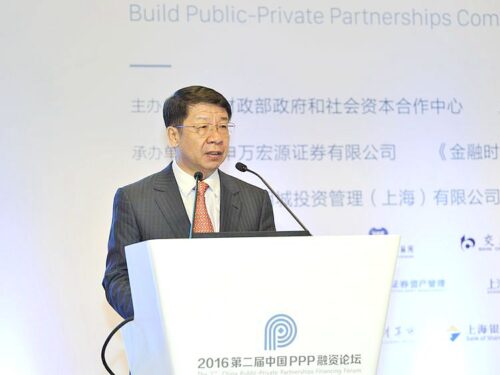
Last month, the National Development and Reform Commission (NDRC) released the list for a third round of private-public partnership (PPP) projects worth RMB 2.14 trillion. This round of PPP projects focuses on promoting traditional infrastructure construction, covering 1,233 projects in seven major areas: energy, transportation, water conservancy, environmental protection, agriculture, forestry, and urban projects. China’s government is vigorously promoting PPP projects, considering them to be the most important domestic investment projects.
China Implements New Unified Work Permit Pilot Scheme
On September 9, 2016, the State Administration of Foreign Experts Affairs’ (SAFEA) announced that the existing Foreign Expert Permit and Alien Employment License will be merged into a single permit. The new permit introduces a tiered classification system for foreign workers, as well as a streamlined online application and tracking system to attract more high-level foreign talent.
Difficulties of unprecedented scale confront global governance and inefficient multilateral mechanisms. To face the difficulties which challenge the formation and implementation of global governance rules, multilateral mechanisms must find ways to avert the threat of world economic recession, reform the international financial system, resolve issues in the Doha round, prevent nuclear weapon proliferation, resolve maritime disputes and antagonism, handle surging Muslim inflows in Europe, and combat terrorism. The global undertaking to combat climate change is a rare bright spot; the significant global progress on climate change since 2013 is largely attributable to China’s major initiatives and effective consultation and coordination between China and the United States, the world’s primary emitters.
The CNCA is responsible for implementation rules, which are rules developed for specific China Compulsory Certification (CCC) categories. These rules pertain to the scope of the category, the requirements of factory inspections, and product surveillance. China Compulsory Certification is required for more than 132 categories of products looking to enter the Chinese market. The rules for each category can be difficult to manage—and when changes come, it can be particularly frustrating.