From the first issue in 1974 and well into the 2010s, the China Business Review was an indispensable resource for businesses, researchers, and policymakers who needed a first-hand account of the challenges and the tremendous opportunities posed by the China market.
Healthcare Series Part 2: New Bidding and Tendering Law Promising for Healthcare Companies, If Implemented
Chinese regulations on tendering and bidding practices published by the Ministry of Finance (MOF) in July are a promising sign for US pharmaceutical and medical device manufacturers that government procurement behavior will be better regulated to guarantee consideration of quality alongside price. However, true improvement for the industry will require regulators to faithfully implement the law and refrain from unofficial practices such as local favoritism, which sometimes plague procurement processes.
How to Protect Your Business from Trademark Squatters in China
Trademark squatting is a form of intellectual property rights (IPR) infringement that is especially rampant in China. US firms are typically more vulnerable to trademark squatting in China because unlike the US, China follows the ‘first to file’ system rather than the ‘first to use’. US firms are often under the wrong assumption that merely by registering their trademarks in the US, they will be recognized in China as well. However, the Chinese system does not recognize trademarks registered in other jurisdictions and will grant protection only to those who file first in China, regardless of the use or intent to use.
Is China Really Opening Its Doors to Foreign Investment?
On January 17, 2017, the State Council issued a circular on a new foreign direct investment policy to open up China’s economic system. At first glance, it would appear that this policy is a reaction to the slowdown in China’s economy. However, in actuality, this recent initiative is connected to a longer-term effort, formulated in 2012, which aims to gradually open up Chinese markets to foreign direct investment (FDI) and to more closely conform with international standards. Understanding the historical background of this policy is important, as it can shed light on the Chinese Government’s long-term objectives and the potential ramifications of the recent legislation.
Healthcare Series Part 1: Reimbursement Drug Lists
Recently announced provincial reimbursement drug lists (PRDLs) provide possible new opportunities for US pharmaceutical companies seeking to expand market reach for their drugs in China. These updated subnational lists largely reflect the national reimbursement drug list (NRDL), which was released by the Ministry of Human Resources and Social Security (MOHRSS) on March 17 for the first time in eight years. However, some PRDLs include potential new openings for drugs that were not among the 300 added to the most recent NRDL update.
China Work Visa: Unified Work Permit Benefits Foreigners
In an effort to attract more foreign talents, the State Administration of Foreign Experts Affairs (SAFEA) has quickened reform to make it easier for foreigners to apply for China’s work visa. Effective on April 1, 2017, the SAFEA rolled out a unified work permit system nationwide that began to process applications both ‘foreign experts’ and ordinary foreign nationals, referred to as R visas and Z visas respectively. Foreign applicants will benefit from this restructure of the foreign work permit system due to its simpler, clearer, and less time-consuming application process.
China’s Individual Income Tax (IIT) Law stipulates that all individuals working and deriving income from within the territory of China are subject to IIT. While Chinese nationals are taxed on all income sourced both domestically and overseas, non-Chinese nationals are only taxed on income deriving from within China. Though IIT is usually filed by employers’ HR and payroll teams on behalf of employees, both parties should be aware of tax thresholds, and implement sufficient salary planning to reduce tax liability. Furthermore, individuals are required to make annual declarations before the end of the financial year. In this article, we give a general overview of how IIT works for foreign nationals working China.
Why the Rise of Robots Will Hit Developing Countries Hardest
In spite of the anti-globalization rhetoric offshoring isn’t the main culprit for the decline of manufacturing jobs. A 2015 Ball State analysis found that 87 percent of American manufacturing job losses over the preceding decade could be attributed to automation and productivity gains, leaving trade responsible for as much as 13 percent. But for all the employment disruption caused thus far by technological advances, the situation, and its political side effects, is likely to become much more serious in coming years. And, contrary to the gloomy message promoted by President Trump, the United States is actually in a far more enviable position than much of the world.
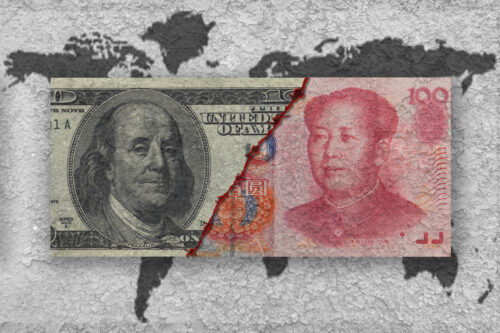
The escalated tensions between the U.S. and China are raising concerns about a potential trade war. The fact is that the business relationship between the U.S. and China is vibrant and mutually beneficial, for the most part. American companies are reporting strong second-quarter earnings and revenues from their Chinese operations. Trade with China has created millions of jobs in the U.S. and provided savings for American consumers. That said, there are real issues of contention in the relationship, and those have to be addressed in a clear, persistent and reasoned fashion. To bring the entire relationship to the brink is not only irresponsible, but self-destructive.
Without doubt, there are problems in the U.S.-China trade relationship. However, the current officially reported U.S.-China trade numbers are grossly inaccurate. They are based on outdated methods of data collection and calculation that were agreed to in the aftermath of World War II, and they have not been properly updated to reflect today’s global economy.
The US-China Business Council’s 2017 reports on state and congressional district exports are out and their findings are clear – though China’s economic growth rate is slowing, it remains an important market for US exports and continues to provide growing opportunities for American businesses, large and small. At the same time, US exports to China under perform what they could be, given the barriers that frustrate full market access to the world’s second largest economy.