Liqi Xu
Manager, Government Affairs and Business Advisory Services
US-China Business Council
Manager, Government Affairs and Business Advisory Services
US-China Business Council
Liqi Xu is a government affairs and business advisory services manager at USCBC’s Shanghai office. Prior to the USCBC, Liqi worked as an industry analyst in a leading tech firm’s finance division, where he was responsible for analyzing Chinese domestic policies, corporate-level strategic risks, and emerging Information and Communication Technology (ICT) trends. Previously, he gained experience in a consulting firm and think-tank.
Liqi holds a master’s degree in politics and international studies from the University of Cambridge and a bachelor’s degree in political economy from Georgetown University.

Beijing is systematically executing its AI+ Action Plan across specific industries, with the energy sector its most recent focus. On May 8, four Chinese government agencies jointly issued the Action Plan for Promoting the Mutual Empowerment of AI and Energy, offering an early glimpse into how Beijing will operationalize its AI ambitions. In explicitly linking AI development and energy security, the document solidifies China’s strategy of embedding AI in existing industrial systems rather than treating AI as its own separate industry.
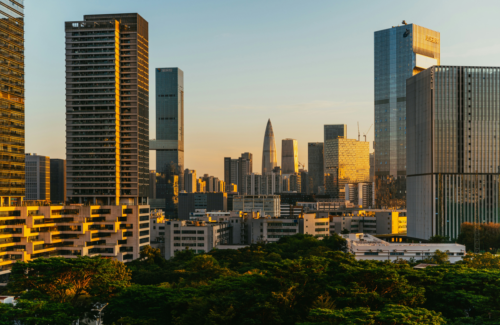
Shanghai, Jiangsu, and Guangdong remain the most mentioned locations for government engagement, unchanged from the past two years and underscoring the sustained economic vitality of the Yangtze River Delta and the Greater Bay Area. Shanghai leads in overall mentions, but Jiangsu surpassed the megacity when accounting for preference strength.
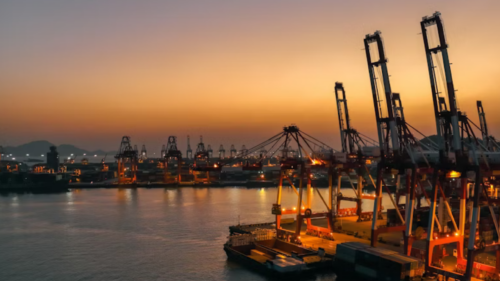
In December, China officially opened the Hainan Free Trade Port (FTP). The Belgium-sized Hainan Island is now a separate customs territory, allowing goods to enter the island tariff-free and exempt from value-added and consumption taxes across 74% of tariff categories. Items subsequently shipped to mainland China may also qualify for tariff-free treatment if their local processing in Hainan accounts for at least 30% value-added.

Multinational companies have struggled to acquire rare earth magnets from China since the announcement, with several USCBC members expressing concern about manufacturing disruptions caused by delays in export approval for rare earth material from China.

At the annual two sessions meetings earlier this month, China unveiled its 2025 government budget, detailing its spending priorities for the year. Aligned with the themes of the Government Work Report, which includes the highest projected deficit-to-GDP ratio in three decades, the budget enables greater spending to allow for a more proactive fiscal policy.