China Provisions in the House and Senate NDAA Drafts
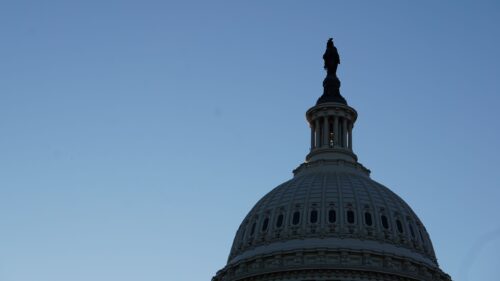
The National Defense Authorization Act (NDAA) for 2027 is coming into focus after the House and Senate armed services committees advanced their versions of the bill earlier this month.
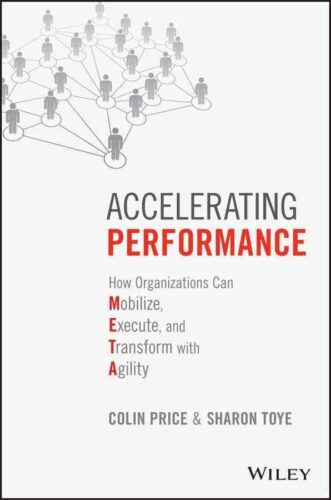
In a world where capital is effectively priced at zero, as much as 30 percent of bottom line performance stems from the leadership’s ability to harness and implement ideas better than its competitors. Yet most companies say their leaders reliably reap only 50 percent of the full potential of their people.
So what’s the secret trick? The ”golden” execution strategies and accelerating mindsets that drive corporate success.
New Horizons: Investing in China’s Civilian Airport Industry
The Civil Aviation Administration of China (CAAC) recently issued guideline encouraging private investment into China’s civilian airports. Along with reducing the number of state-owned and state-holding airports, private investors now have full access to the construction and operation of civilian airports and their affiliated facilities. Intermediate services, such as consulting, designing, and airport maintenance, are also open to qualified private and foreign entities. In addition, the approval mechanism for private investment in terminals, logistics, and other operations has been removed. The guideline also emphasizes innovation of financing methods for construction and operation, especially in regards to the public-private partnership (PPP) structure.
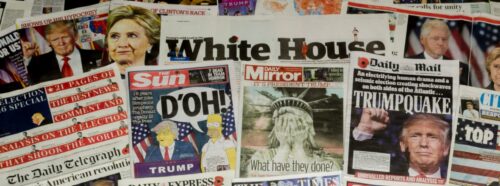
In affirming in November that he will end US participation in the Trans-Pacific Partnership (TPP) free trade accord, as well as its European variant, the Transatlantic Trade and Investment Partnership (TTIP), Trump has put down a marker: free trade is in the crosshairs. No target looms as large as China.
FDI in Green Buildings in China – a Solution for its Affordable Housing Problems?
In July, China’s State Council released data showing that the country is aiming to construct 3,500 new urban areas by 2030, with a collective capacity of 3.4 billion residents – roughly half of the world’s population. Although criticized as unrealistic, the target underlines a major problem China faces.
USCBC Gala 2016: Focusing on the Future of US-China Relations
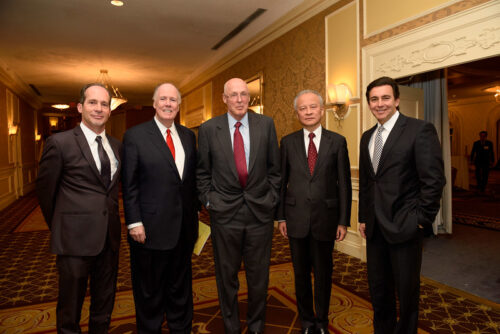
USCBC hosted its annual Gala, featuring a bipartisan panel with former US Treasury Secretary Henry Paulson Jr. and former National Security Advisor Thomas E. Donilon. USCBC board chair, Mark Fields, President and Chief Executive Officer of the Ford Motor Company, moderated the discussion, which focused on the state of US-China relations and the future of the increasingly complex relationship between Washington and Beijing. The program also featured China’s top envoy to Washington, Ambassador Cui Tiankai, who has distinguished himself for his service strengthening the ties between the two largest global economies and as a strong supporter of USCBC. Gala is our flagship fundraiser and an important component of ensuring USCBC remains at the forefront of representing American business interests with China. USCBC will continue to play a critical role during the transition to a new administration and represent the best interests of the American business community.
China Business Review (Archive Only)
Nicole Golliher