Member Exclusive
How Washington Is Expanding FCC Tools To Restrict Chinese Imports
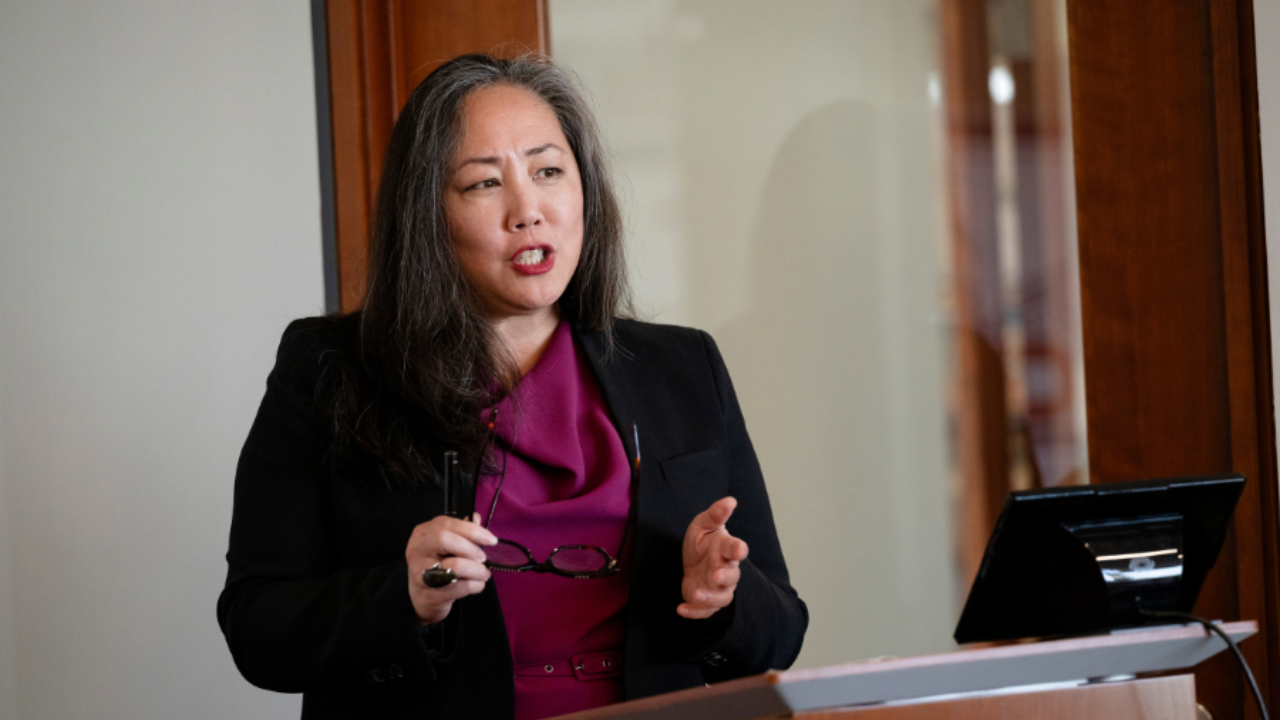
Mieke Eoyang is a national security policy expert, having previously served as the deputy assistant secretary of defense for cyber policy. In that role, she was the senior civilian responsible for cybersecurity and electronic warfare strategy and policy at the Department of Defense, aligning the use of cyber for offense and defense within the broader defense and US government strategies. Prior to her service in the executive branch, she was a recognized think tank leader in developing policies and strategies to address cybercrime, ransomware, electronic surveillance, and privacy. She also has over a decade of service on various congressional national security roles.
We have a chaotic policymaking process in the United States right now. There seems to be a real disconnect between President Trump and other parts of his administration, as well as between the executive branch and the legislative branch. There doesn’t seem to be a shared understanding of what is in the strategic interest of the United States. The president is also having negotiations directly with the Chinese leadership, but we haven’t seen a clear articulation of the goals of those deals — are we trying to open up China as an American market, or are we trying to constrict its technology growth and compete globally?
The challenge is that without an effort to reach a unified understanding, we get partially adopted policy proposals.
The challenge is that without an effort to reach a unified understanding, we get partially adopted policy proposals, or Congress passes something, but the executive branch doesn’t fully implement it. And even if you take the strategy of chip export controls as the right thing to do to slow China’s growth, if that is not implemented properly, what does that mean for that end goal?
If you are a global customer looking at the policy direction of the United States, not just in China but also in Japan and the Netherlands, you don’t have clarity on how to proceed. And as political power changes, the dynamics of those policies might change, which makes it harder to plan for long-term growth. We haven’t done enough analysis that takes into consideration the political realism of this moment, and how that affects people’s economic decisions.
Export controls are not without economic impact. You have to consider the totality of your relationship when asking other countries to impose them. When you look back at the Biden administration, yes, we were asking our partners to align with us on export controls, but at the same time, we were very clearly demonstrating their value to us as partners and strengthening other parts of the alliance. We were, for example, strengthening our defense cooperation with Japan and talking with them about extended deterrence. The same was true with NATO. The current administration has taken a different approach to alliances.
It’s hard for countries to do tough things at the behest of their friends if they’re not sure about how solid that friendship is.
The Biden administration’s focus on allies as a strategic enabler, not in a transactional way but based on shared values, is important when asking your friends to do hard things. It’s hard for countries to do tough things at the behest of their friends if they’re not sure about how solid that friendship is.
Many people believe there’s a critical window in the AI space, and that if we can stay ahead of China long enough, there will be a “takeoff” effect, after which we’ll have an insurmountable lead. If that theory is true, then being able to control indigenizing efforts over a short window might make sense.
But if that is not true and if this is an ongoing race, there are other factors that make a difference, including how diffuse your AI adoption is. Then the efforts that China takes to create an indigenous chip development stack, or just the idea that it could do it by itself, could be a strategic mistake, not just for the United States but for the world. Integration of global supply chains is a deterrent to armed conflict because we all need each other for continued economic development. If international trade is no longer one of the core global underpinnings for peace, then we could wind up in a much more vulnerable place.
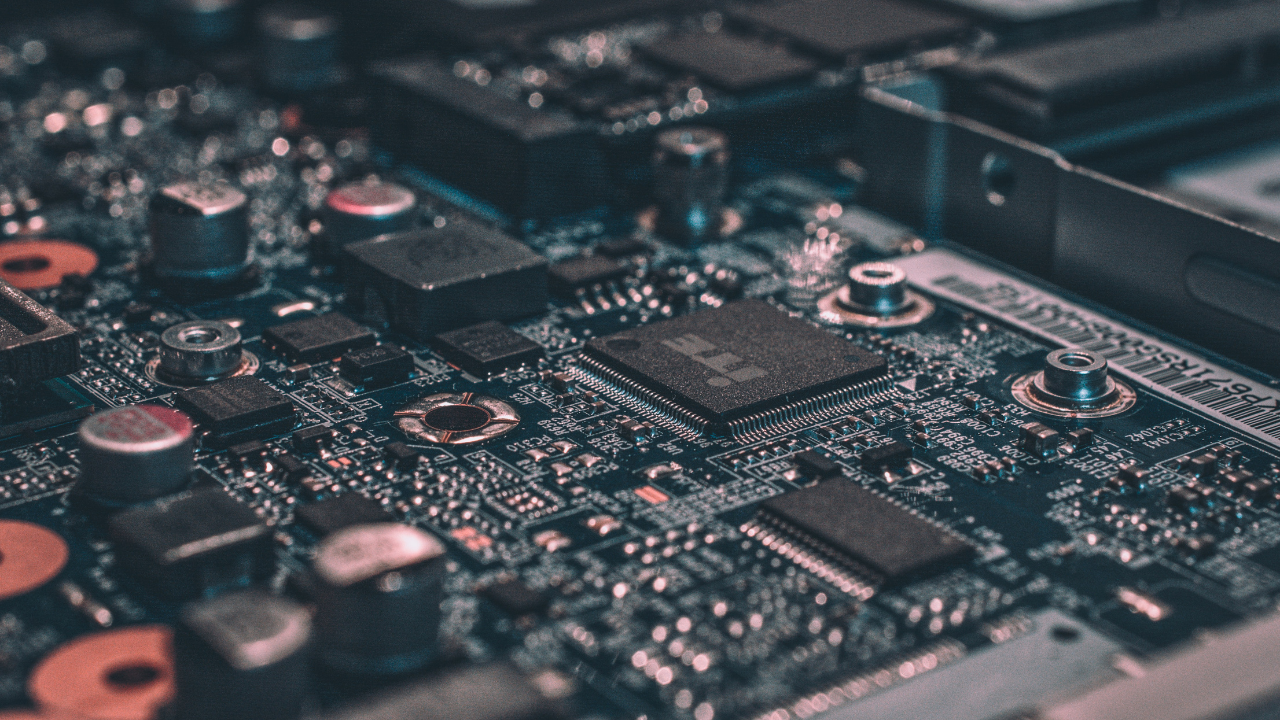
Global chip production is integrated. There is no one country that can produce everything, so a conflict that disrupts one piece of it — Taiwan, Japan, wafers, fabs — will ripple throughout the entire global economy. One hopes that leaders are wise enough to consider the downstream economic impact when deciding whether to engage in armed conflict, but recent evidence has shown us that this hasn’t been part of the conversation, at least in the United States. I don’t know to what extent that’s part of the conversation in China, but it is something that US and Chinese businesses should be emphasizing to leaders in both countries — the risks of breaking that economic interdependence, and what it could mean when it comes to conflict.
It’s an important question. The release of Anthropic’s Mythos model changes the calculus on import bans. These bans are designed to address one category of risk — the idea that the maker has engineered in a vulnerability that they uniquely know how to exploit when the product arrives in the target country. But when AI models like Mythos are so good at finding vulnerabilities, can you really hide or exploit them? And are Chinese products any more vulnerable or exploitable than products made anywhere else in the world?
We need to reexamine the assumptions underneath import bans to determine whether we are over-securitizing at the expense of the American consumer.
We need to reexamine the assumptions underneath import bans to determine whether we are over-securitizing at the expense of the American consumer, who may either not be able to find a replacement product or whose replacement product cost goes up tremendously. The router ban could raise the cost of home internet for every American. We’re already in an affordability crisis. If things become even more expensive, people will grow more frustrated, especially if the security argument doesn’t hold like it once did.
The playing field may look very different by the time the ban takes effect in a year. Where are we going to be on these AI models and their ability to find or patch vulnerabilities? That needs to be considered before we ask the American consumer to either pay more or go without.
It’s important for the United States and China to not just focus on each other as a threat actor and technology competitor but also think about how cybersecurity issues impact a wider global audience.
The United States has a “name and shame” approach when it comes to Chinese cyber actors, calling out the people behind cyber attacks. But the approach is broader than that — it’s a transparency one. The United States supports and protects independent cyber researchers and has created a government inventory of cybersecurity vulnerabilities. These demonstrate it is interested in a collective defense approach to cyber and willing to have people outside of its control close vulnerabilities for the safety and security of everyone. You don’t see that same approach in China, even as Chinese products percolate through the global ecosystem. There isn’t a cataloging of vulnerabilities and welcoming of independent researchers or customers who find vulnerabilities.
With AI models increasingly discovering vulnerabilities at scale, it’s even more important that we are having conversations with the two largest technology producers about patching those holes.
With AI models increasingly discovering vulnerabilities at scale, it’s even more important that we are having conversations with the two largest technology producers about patching those holes. It’s not just that one country or another will benefit from an engineered invulnerability. Both are exposed to inadvertent vulnerabilities that can be discovered and exploited by third parties. We’ve seen other countries use both US and Chinese technology to work their will on other people entirely. You see this playing out with Iran and Russia. So, if both the United States and China are interested in maintaining trust with their global customer bases, then they need a better shared understanding of how to have that cybersecurity conversation.
With a technology as powerful as AI, it’s important that the United States and China discuss plans for model release and evaluation. How do we understand the limits, capabilities, and vulnerabilities of these technologies? Models all have different strengths and weaknesses. How do we understand what those are, both as a general matter and as the two countries look to adopt AI as a tool to advance their militaries? How does AI affect cognitive decision making and where models interact?
We are still trying to figure out how AI works. Each iteration of the models is a dramatic improvement and has surprised researchers. But there are unique risks to AI that are worth having more conversations at a human, strategic level about.

Given the way the global technology ecosystem has developed over my lifetime, it’s hard to imagine stacks being disentangled into purely national-origin ones. People are going to try, but it is unclear whether that’s technologically feasible or economically efficient. Different countries and companies will develop expertise in different areas. If they try to wholly own their stacks, and if it’s not as efficient to do so, what does that mean for labor costs and human capital flows? Even if it was feasible, is it advisable — what’s the cost?
Enterprises make decisions about what technology to adopt based on capability and price. The United States is focused on developing the most advanced frontier models. China is behind on that, but its models have been running much more cheaply. There’s a real tension there as the countries compete for customers — paying for the best versus “good enough” at a discounted price. And will an enterprise go with entirely one stack end-to-end, or is it going to use different types of technology for different parts of its operations?
The jury’s still out on what makes the most sense. We’re still at the early stages of technology evolution, so it’s hard to predict.
The development of high-end technology like semiconductors and AI frontier models requires the top talent globally. The United States is one of the few places that has historically welcomed people from anywhere around the world and let them become Americans. It’s not the same in China. So there is a strategic advantage in America that we should be using to win that global talent competition. Having the best minds means the best designs, the most innovation, the most competition. It’s important that we are bringing that talent here to where it can flourish and add to American economic growth.