Claire Zhao
Manager, Business Advisory Services
Washington, DC
Manager, Business Advisory Services
Washington, DC
Claire Zhao is a business advisory services manager at the US-China Business Council. Prior to joining the Council, she interned at the energy security and climate change program with the Center for Strategic and International Studies. She also served as a student consultant for the Bureau of Energy Resources, focusing on critical mineral supply chains and clean energy technology issues. Claire holds a master’s degree in International Relations from the Johns Hopkins School of Advanced International Studies and a dual bachelor’s degree in Quantitative Economics and Global Studies from the University of California, Los Angeles. She is a native speaker of Mandarin.
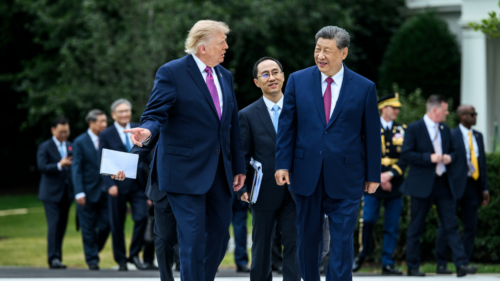
Almost a month after President Xi Jinping’s state visit to the United States, many details around any deal and its implementation remain unclear. Here’s what we do know.

USCBC interviews James Rowland, president and founder of Clear Arrow, who brings over 20 years of experience in international government affairs at Ford, on the US decision not to renew the United States-Mexico-Canada Agreement. He explains that the outcome, which does not trigger an exit clause but rather an annual review process, is an opportunity for Washington to address what it views as shortcomings of the agreement, bolster North American competitiveness, and set rules for Chinese participation in the US auto space.
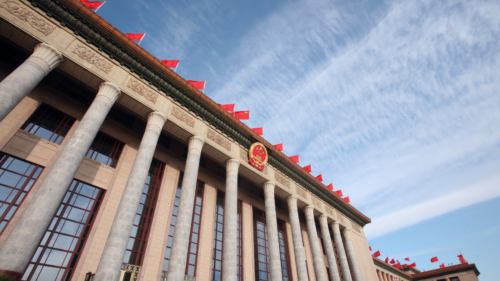
China continues to expand its retaliatory toolkit as geopolitical and trade tensions with the United States and, increasingly, the EU intensify. The tools vary in scope and severity, each with its own specific impacts on multinational companies operating in China. This primer covers the tools at China’s disposal to counter actions it perceives as inappropriate or unfair, starting with those most overtly retaliatory.
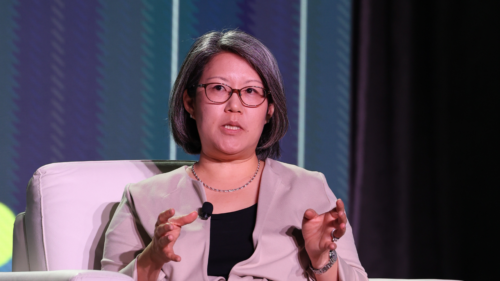
USCBC interviews Jane Nakano, senior fellow at the Center for Strategic and International Studies’s Energy Security and Climate Change Program, on China’s energy landscape. Topics include impacts of the war in Iran, challenges in China’s decarbonization push, the role of energy in US-China tech competition, and areas for foreign participation.

Just six days after issuing the Regulations on Industrial and Supply Chain Security (Doc. 834), China’s State Council released the Regulations on Countering Foreign States’ Improper Extraterritorial Jurisdiction (Doc. 835), another expansion of Beijing’s retaliatory toolkit. Unlike Doc. 834, which governs sectoral and commercial supply chain security and is triggered by a demonstrable harm or threat, Doc. 835 targets foreign legal pressure itself regardless of commercial impact and can therefore be invoked under a lower evidentiary threshold.