Member Exclusive
How Washington Is Expanding FCC Tools To Restrict Chinese Imports
 James Rowland is president and founder of Clear Arrow, a Washington, DC, advisory firm that helps organizations navigate the political, regulatory, and stakeholder dynamics of industrial policy in the United States and abroad. He brings more than 20 years of global government affairs experience from Ford Motor Company, with senior roles in Washington, Shanghai, and Toronto covering trade, industrial policy, and US-China supply chains. He holds an MBA from the Ivey Business School and is a member of the US-China Business Council and the Canada China Business Council.
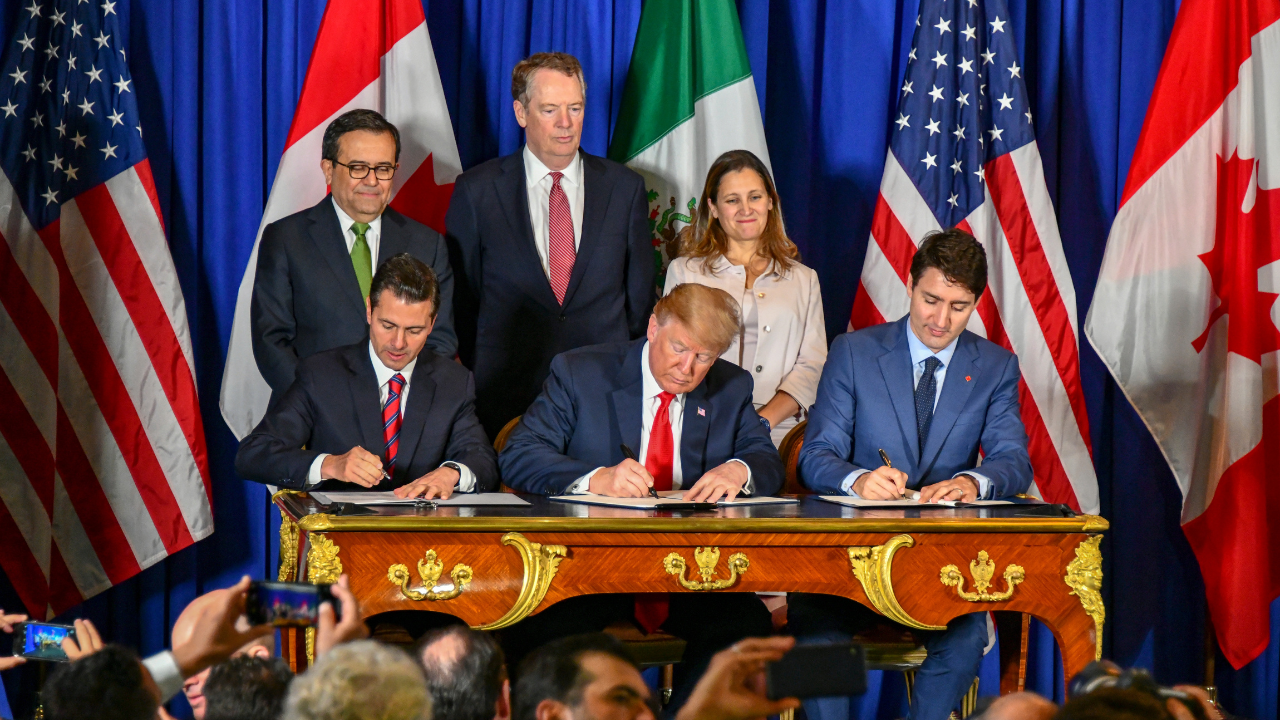
The United States did not walk away from the agreement, nor did it trigger the exit clause. USMCA remains in force. What happened was the administration chose not to rubber-stamp a 16-year extension without addressing what it sees as shortcomings. That triggers the annual review process built into the 2019 agreement for exactly this scenario, so parties could stay in the room while working on the terms.
This outcome is not a surprise. Two Section 301 investigations are ongoing: one into structural manufacturing overcapacity across 16 economies including China, and one into forced-labor import enforcement failures across 60 economies, also including China. Until those conclude, the administration cannot deal substantively with the Section 232 tariffs on steel, aluminum, autos, and lumber, or with the structural elements of USMCA.
The July 1 decision locks in uncertainty rather than resolving it.
For USCBC members and everyone watching this closely, the key insight is that the July 1 decision locks in uncertainty rather than resolving it. US Trade Representative Jamieson Greer has stated the administration will “continue to engage with Mexico and Canada to address USMCA’s shortcomings.” Whether the negotiation lands a deal before the midterms or extends into an annual review cycle is not yet clear.
President Trump has always felt that the trade status quo wasn’t working, with too many imports displacing locally produced products, especially automobiles. This led to his wholesale renegotiation of the North American Free Trade Agreement. The result was USMCA, which in many respects remains a gold standard.
Six years in, however, the president and Ambassador Greer have been critical that USMCA has not delivered as designed. The president has said he can do without it, but most see these statements as cover to create leverage for the significant reforms required.
Canada and Mexico both formally support renewal. There’s been chatter about the two working together without the United States, a byproduct of the president’s attacks on Canada, and about Mexico being prepared to go bilateral with the United States. But the outcome both countries want is a working trilateral.
The concern is real, and the hard evidence is moving in that direction, even if still developing. A workable safeguard would have four elements. First, disclosure. Importers would report US content, USMCA regional value content, steel and aluminum origin, and compliance status. Then, a defined cap. Any good exceeding a threshold of Chinese-origin content would not qualify for USMCA preference, regardless of where final assembly occurred. This is the element drawing the most policy attention right now.
The last two elements would be enforcement and transshipment. Enforcement would test Chinese content against the rules of origin at entry, which would make the cap real instead of aspirational. Transshipment would close the current loophole where a part shipped from China and reassembled in Mexico can count as Mexican.
Without all four, any content rule would be hard to enforce.
Both countries are in a difficult position, but they are heading in different directions. Canadian Prime Minister Mark Carney’s January trip to China produced a tariff-quota deal permitting up to 49,000 Chinese electric vehicles at a 6.1% tariff, in exchange for Chinese tariff relief on Canadian canola and other agricultural products. That trade-off makes commercial sense for Canada in the aggregate, but on the automotive front it puts Canada’s China posture at odds with the US position.
Both countries have an interest in maintaining ties with China, but both have to square the circle with Washington in this agreement.
Mexico has moved the other way. In 2025, it was the top destination for Chinese vehicle exports, with about one in five cars sold there made in China. But Mexico raised its tariff on Chinese vehicles to 50% effective this past January, a concession that has gained favor in Washington.
Both countries have an interest in maintaining ties with China, but both have to square the circle with Washington in this agreement. Autos are one of the key sectors to watch. Both Ottawa and Mexico City have to land USMCA to shore up their own auto sectors, and it wouldn’t surprise me if, in the background, they’re weighing what concessions they could make to a Washington ask centered on a more “Fortress North America” approach.
The success of China’s auto industry, and the pace at which it has scaled exports, presents a historic competitive challenge to global auto manufacturing and to the US position, in particular. Mexican and Canadian auto production is deeply integrated with US manufacturing, which is why China has become such a focal point in the USMCA review.
After World War II, Japan set out to rebuild its economy and crafted an industrial strategy around chosen sectors including automotive, making it a pillar of the economy. Within a few decades, it had become a global auto power. South Korea saw the same opportunity, made automotive a cornerstone, and did many of the things Japan had done, including implementing a tightly coordinated export strategy in which companies worked closely with the government to expand and export worldwide. Both countries faced significant backlash over the volume of their vehicle exports to North America, and they answered it by investing here, becoming domestic players in many ways.
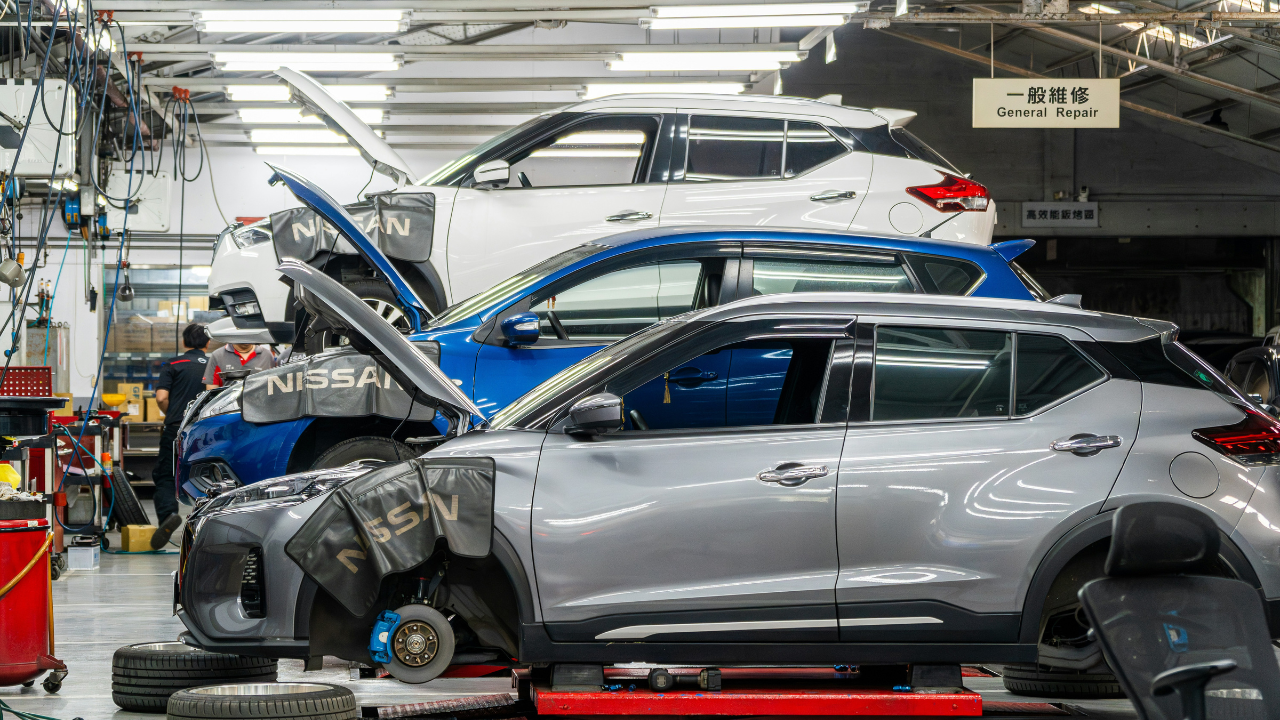
China has taken the same approach, choosing automotive as a strategic sector and pursuing an aggressive export drive. Given the scale of the threat, there is near consensus that China should not be allowed to establish a manufacturing beachhead in North America. The response is to address the competitive threat upfront, which is what the high US tariff wall on Chinese vehicle imports is already doing. This shouldn’t be interpreted as closing the door; there will be areas where working with Chinese automakers makes sense. The point is to define the terms in advance. Some will call it protectionism. What matters is securing the North American footprint.
When China opened its automotive market to Western automakers, it faced a policy inflection: how to open up while protecting the market for domestic industry. Its answer was high investment thresholds, mandatory joint venture partners, tariffs around 25%, and value-added taxes. That structure protected China’s market while its indigenous industry developed.
North America faces the same kind of inflection point today. USMCA is a central part of the strategy to answer it, and the broader industrial policy conversation, including how to curb Chinese imports, has to be built around it. Including Mexico and Canada in that conversation is critical to preserving the competitiveness of the North American auto sector.
Higher thresholds on the margins, I believe, are doable, but only with transition time. When then US Trade Representative Robert Lighthizer and Chief of Staff Jamieson Greer renegotiated USMCA in the first Trump administration, they raised regional-content levels but provided that time. Vehicles that didn’t yet meet the new levels could still qualify for zero tariffs if the automaker committed to a phased plan to raise content. That precedent matters now.
Automakers will accept more stringent requirements only if they preserve the competitiveness of building inside North America.
What has been floated is likely an opening US ambition, and opening positions typically get walked back for good reason. Push the threshold too aggressively and some manufacturers will opt out of USMCA compliance altogether. They may eat the tariff, or they may adjust their lineups, even pulling products from North America, to avoid the cost of compliance. Net US content could fall rather than rise as an unintended consequence. Automakers will accept more stringent requirements only if they preserve the competitiveness of building inside North America.
What’s new this time is the treatment of China content, which wasn’t part of the original USMCA. Automakers may have to declare their level of Chinese content, ensure it is capped, and commit to bringing it down if they exceed the cap.
There is strong interest, but Chinese investors are waiting to see how USMCA and US-China relations play out. Even in this period of relative calm, conditions remain potentially volatile.
In that environment, a Board of Investment is exactly the mechanism US industrial policy needs. It is not an anti-China measure but a framework for positioning the United States to lead in one of the most important regions in the world, with clear rules for Chinese investment.
The Ford-CATL licensing deal is an example of what the Board could allow: a Ford facility using licensed CATL technology, expanding China’s footprint in the US auto space on terms the United States defines. The Board’s role would be to set standards for Chinese participation across sectors, which technologies can be licensed, which cannot, and what safeguards must accompany any deal.
Many are analyzing what comes next. From my vantage in DC, I would watch three things.
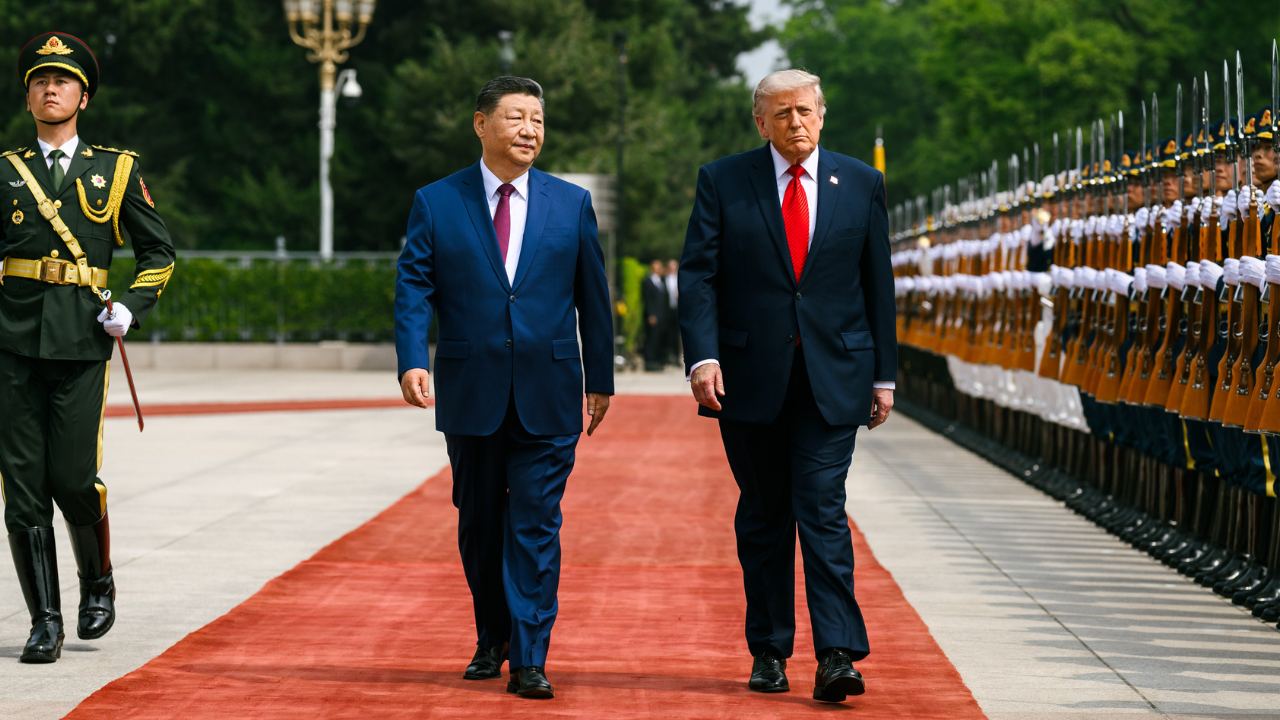
First, the broader US-China environment through the fall, including the September Xi visit. If the bilateral warms, the pressure on North American content rules to substitute for direct China measures may ease. If it chills, the reverse.
Second, the Section 232 tariffs. These remain on the table for Canadian steel, aluminum, autos, and lumber, and they are a competitiveness tax on US manufacturing and on the North American auto sector overall. Any serious North American industrial strategy focused on China has to deal with them, because they pull in the opposite direction of the integration the strategy depends on.
Third, the political calendar around the midterms. The July 1 announcement did not close the door on a USMCA deliverable before November. There is political motivation across US sectors — agriculture, autos, energy — to see a stable trilateral framework. If the White House concludes there is a midterm win to be banked, the annual review cycle could move fast. Watch for signs of that decision.
For Beijing, a prolonged period without clear rules is useful. The longer the annual review takes to produce coordinated North American China measures, the more room Chinese firms have to move ahead of them. The delay is the advantage.
The real risk for US policy is not that the annual review produces a bad China strategy. It is that it produces no strategy at all, while Chinese firms use the window to embed positions in critical minerals and vehicle platforms that become more entrenched. That uncertainty flows both ways: US companies cannot plan how to engage with China, and Chinese companies cannot plan how to invest in the United States. USMCA can be the foundation of that strategy. What I’ve called Fortress USMCA, the preservation of tariff-free scale across the trilateral, is what gives it competitive advantage. Coordinated content rules, safeguards, and aligned investment reviews across Canada and Mexico only work with a reaffirmed US commitment.
Companies that stay engaged will shape the outcome. That’s my message to businesses.
For those of us who have worked to support US-China commercial ties, there has never been a more important time to maintain communication with US and Chinese counterparts and demonstrate your ongoing commitment. The China elements of the review — rules of origin, safeguards, the Board of Investment — could move quickly. This is about shoring up North American competitiveness, not decoupling. It is about setting ground rules, similar to those China itself put in place when it opened its market to Western automakers. Chinese investment and partnership continue to make a real difference across many parts of the US economy. Companies that stay engaged will shape the outcome. That’s my message to businesses.