US-China Trade War Spills Into Third Countries
By offering an avenue for Beijing to reorient its exports and for Washington to strengthen existing China trade restrictions, third countries are becoming a key front in bilateral trade conflict.
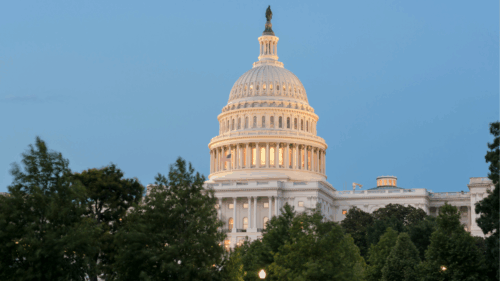
All eyes are on the Senate to pass the reconciliation tax and spending package after the House passed its version by a vote of 215–214. The so-called big, beautiful bill is aimed at making 2017 tax cuts permanent and includes provisions related to energy, health care, and other economic issues. It is a budget reconciliation bill which is designed to fast-track policy and avoid higher vote thresholds for passage. Several provisions have important US-China trade implications.
Multinational companies have struggled to acquire rare earth magnets from China since the announcement, with several USCBC members expressing concern about manufacturing disruptions caused by delays in export approval for rare earth material from China.
Under this system, duties are incurred only when goods enter China’s domestic market. However, to close tax loopholes and monitor specific “sensitive” goods, the new rules impose stricter requirements on the storage, processing, and domestic sales of sensitive imports, while also narrowing the scope of goods impacted.
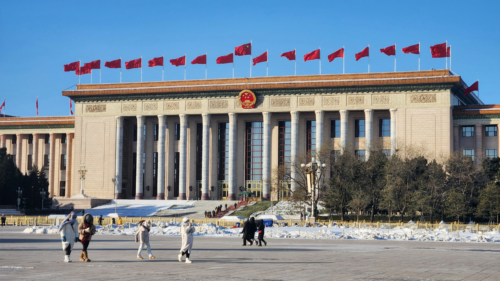
On May 14, China’s National People’s Congress and State Council released their legislative plans for 2025, offering a window into economic and social priorities. Included are a landmark law to guide macroeconomic development planning, stricter regulation of financial markets, and legal tools to respond to foreign sanctions.
At a press conference this month, the People’s Bank of China announced a new round of supportive economic measures aimed at enhancing liquidity, reducing borrowing costs, and supporting targeted sectors. These measures follow promises of further stimulus first announced in late 2024 and reiterated throughout Q1 2025.
Beijing is recalibrating its domestic consumption strategy in 2025. Using the services sector as a testing ground, recent policy efforts aim to boost both actual and perceived wealth among Chinese households, thereby fostering a “wealth effect” that encourages consumption. Through livelihood-oriented reforms, premium services campaigns, and selective liberalization to attract foreign investment, the government is attempting to engineer consumer sentiment by making spending feel safe, worthwhile, and emotionally rewarding.
China’s economy got off to a strong start in 2025, but it is uncertain whether this momentum can be maintained amid an intensifying trade war with the United States. According to data released by the National Bureau of Statistics, China’s first quarter real GDP reached 31.88 trillion yuan ($4.37 trillion), increasing 5.4% year-on-year and surpassing most forecasts.
Over the past month, US-China trade tensions have escalated to unsustainable heights. In response to new US tariffs, China imposed a 125% tariff on all US imports, noting that it will not engage in any further tariff increases as part of a “numbers game.”
China has seen several high-level personnel changes at the central and provincial levels over the last few months. On April 16, Li Chenggang (李成钢) was appointed vice minister and international trade representative of the Ministry of Commerce (MOFCOM), succeeding Wang Shouwen (王受文).