Francisco Bencosme
Director, Government Affairs
Washington, DC
Director, Government Affairs
Washington, DC
Francisco Bencosme is a director on the government affairs team at the US-China Business Council, where he helps more than 200 American companies navigate US-China issues. He was formerly the China policy lead for the US Agency for International Development, serving as principal advisor to the USAID administrator on issues relating to China and Taiwan. Prior to joining USAID, he was deputy to the Special Presidential Envoy for Compact of Free Association negotiations, helping conclude three 20-year compact agreements with Pacific Island nations. He concurrently served as senior advisor to Assistant Secretary for East Asian and Pacific Affairs Dan Kritenbrink. Before joining the Biden-Harris administration, he was a senior policy advisor at the Open Society Foundations covering Asia and Latin America and led the US human rights policy and advocacy program toward the Asia-Pacific at Amnesty International USA. He previously served as a professional staff member on the US Senate Foreign Relations Committee.
He is a Council on Foreign Relations term member, a Truman Security Fellow and a Penn Kemble Fellow. He received his master’s degree in foreign service from Georgetown University and his bachelor’s degree from Wake Forest University.
Americans’ views of China are becoming more favorable, albeit from a low baseline, according to national polls. The shift appears to be sustained rather than short-term, with younger Americans more open to cooperation with China than older Americans. This year alone, however, Congress has held more than 35 hearings focused on China and considered more than 120 China-related provisions across the House and Senate versions of the National Defense Authorization Act. That mismatch suggests that the bipartisan consensus on China is stronger among politicians than the general public.
As Congress looks to complete its work before the midterm elections, USCBC members should closely monitor negotiations over the 2027 National Defense Authorization Act (NDAA), an annual must-pass bill that sets policies and funding for the Defense Department. As in recent years, Congress is using the NDAA as a vehicle to address China-related economic and national security concerns.
President Donald Trump is attempting to reshape the global economic order by moving away from traditional free trade agreements toward bilateral Agreements on Reciprocal Trade (ARTs). These agreements, initiated after the imposition of sweeping “Liberation Day” tariffs last year, ostensibly aim to open new markets for US exports, reduce foreign tariffs and non-tariff trade barriers, and spur alignment with US economic and national security measures.
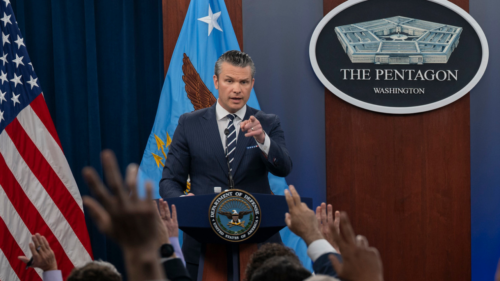
The Department of Defense’s 1260H list — often referred to as the Chinese Military Companies (CMC) list — is back in the spotlight after an updated version was abruptly removed from the Federal Register just hours after being published late last week. While it’s unclear when a list will be republished and who will be on it, companies should be aware of the list’s growing importance.
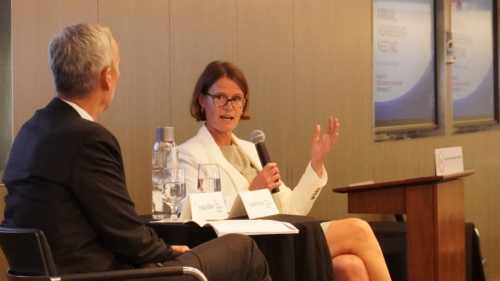
USCBC interviews Sarah Beran — partner at Macro Advisory Partners, former deputy chief of mission at the US Embassy in Beijing, and former senior director for China and Taiwan affairs at the White House National Security Council — on Trump’s anticipated visit to China in April. Topics include the preparatory work required for presidential summits, how to assess their outcomes, and advocacy channels for businesses.