China Provisions in the House and Senate NDAA Drafts
The National Defense Authorization Act (NDAA) for 2027 is coming into focus after the House and Senate armed services committees advanced their versions of the bill earlier this month.


China now outranks the United States in one more category: sales of new-energy vehicles (NEVs). In 2015, China produced and sold more than 300,000 NEVs, a more than 300 percent annual increase, according to the China Association of Automobile Manufacturers (CAAM).
China’s new Online Publishing Service Administrative Rules became effective on March 10, 2016. The law, which aims to “regulate the criteria of and promote the healthy development of internet publishing services”, has already restricted the online activity of several Western MNCs – including Apple’s iTunes and Disney’s DisneyLife – but what wider implications do the rules have for internet censorship in China?
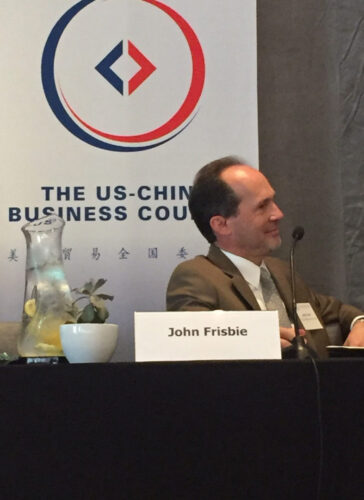
The US-China Business Council (USCBC) hosted its 43rd Annual Membership Meeting, the leading forum for strategic intelligence and insight on US-China commercial relations, on May 31. The conference featured business-focused analysis of the top issues confronting company executives and policy experts, and attracted attendees from over 60 member companies, including AT&T, Dell, Facebook, and Ford Motor Company.
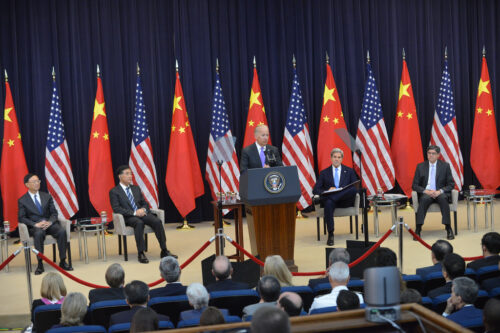
US and Chinese government officials are gearing up for the eighth annual Strategic and Economic Dialogue (S&ED) next week in Beijing. Priority issues for negotiators regarding US industry include industrial overcapacity, investment liberalizations, intellectual property rights, and transparency. The talks coincide this year with Beijing’s role as G20 host, the final year of the Obama administration, and worries that the pace of China’s reforms is slowing—a setting that may provide as many opportunities as challenges for negotiators.
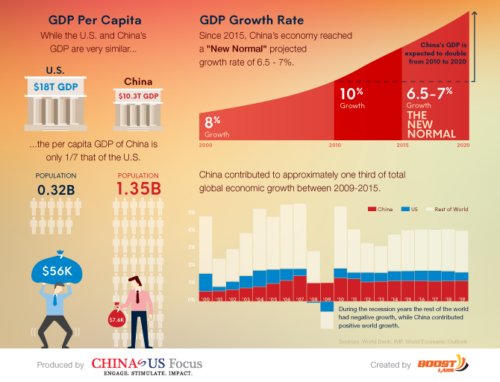
The per capita GDP of the United States is 7 times that of China.
By Baker & McKenzie Companies see huge opportunities in the Association of Southeast Asian Nations (ASEAN) block as mega-regional trade initiatives work in tandem to improve connectivity and the overall business environment in the region, according to a Baker & McKenzie report released in May. The ASEAN Connections report is based on a survey of […]
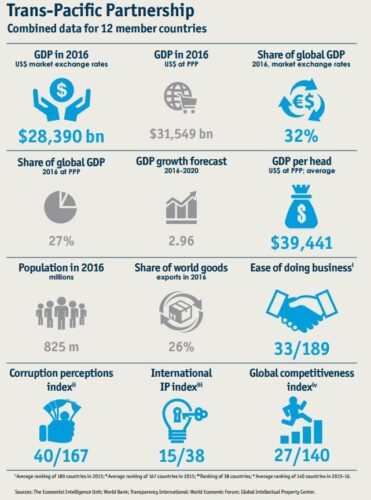
Companies say the mega-regional initiatives — the Trans-Pacific Partnership (TPP), the Regional Comprehensive Economic Partnership (RCEP), and China’s One Belt One Road (OBOR) — deepen regional integration. The companies rated TPP and RCEP as particularly effective change agents; 85 percent expect TPP and RCEP to boost economic integration in the region, and predicted growth with similar proportions in both intraregional trade (85 percent) and investment (84 percent). These predictions are slightly higher than the rates expected from OBOR, which was 63 percent for both intraregional trade and investments.
With Ecommerce exploding across China, businesses from around the world are flocking to the fray. Access to this tremendous market is complicated by the need to choose a third-party agency that offers international companies that don’t have a physical presence in China access to Chinese Ecommerce platforms, also known as a Tmall Partner or Trusted Partner (TP). When expanding into China’s dynamic Ecommerce market, choosing a trustworthy TP is essential to connect with discerning Chinese consumers and avoid squandering resources.