Member Exclusive
China’s New Energy System To Prioritize Efficiency, but There’s No Quick Fix

Compared with many other Asian economies, China is more resilient, but a prolonged energy crisis will generate challenges for its economy. China has already authorized state-owned oil enterprises to tap into commercial reserves. Down the road, the country may have to undertake an even larger release of crude oil, touching more of its commercial and even government reserves.
When we think about energy supply security, we need to remember that high prices are one thing, and supply shortage is another. Countries with huge economic resources, like China, can always pay more if price is the issue, unlike less developed countries. In the current crisis, though, it’s not just the price levels — it’s also the supply being reduced, which has two main effects on China with respect to oil.
First, challenges accessing crude oil affects China as a refiner, constraining the country’s output of feedstocks, like naphtha and liquified petroleum gas, and the downstream goods that depend on them, like plastics and rubber. Second, the supply crunch is also with Middle Eastern feedstocks and products, so it affects China as an importer of these.
This energy crisis has validated China’s approach to energy security, but more for reasons other than renewables.
The current crisis has validated China’s emphasis on supply diversification.
The big picture is that China has both domestic oil and gas production and robust land-based energy trading relationships that complement its maritime ones. What’s more, as important as Middle Eastern oil and gas supplies may be, China’s maritime energy trading partners are from a variety of continents, including Australia and Malaysia within the Asia-Pacific, Brazil and the United States from the Americas, and Russia. The current crisis has validated China’s emphasis on supply diversification.
Electrification of the transportation sector has helped by reducing the need for oil-based fuels like diesel and gasoline. Whether that electrification is due to renewables or coal is somewhat secondary in terms of energy security value. While renewable capacity growth is impressive, utilization still struggles.
The central government still likes coal for its energy security-related attributes — it’s easy to store, it provides a base load, and even though China imports some coal, there’s still the notion that it’s an indigenous resource.
But there is a political economy factor, too. Because of local-level incentive structures, each province or locality wants to keep its local power plant operating to generate tax revenue rather than importing renewable electricity supply to meet the local demand — so, there is limited desire to be on the receiving end of the renewable electricity trade. China has been working to reform dispatch rules and incentivize a more market-based system and to promote renewables. That’s a work in progress.
Then there are infrastructure challenges. The ongoing focus on high-voltage transmission lines is very important, given it’s a massive country with a mismatch between where the resources are generated, especially renewables, and where electricity is consumed. But the grid system needs to be modernized. Sensing where demand and supply could be better matched, potentially through AI, would be a big plus. Battery storage technology is also key for utilizing intermittent renewable resources, whether it’s wind or solar. Unless you can store it, renewables won’t help you much; you’d otherwise end up with a lot of curtailment.
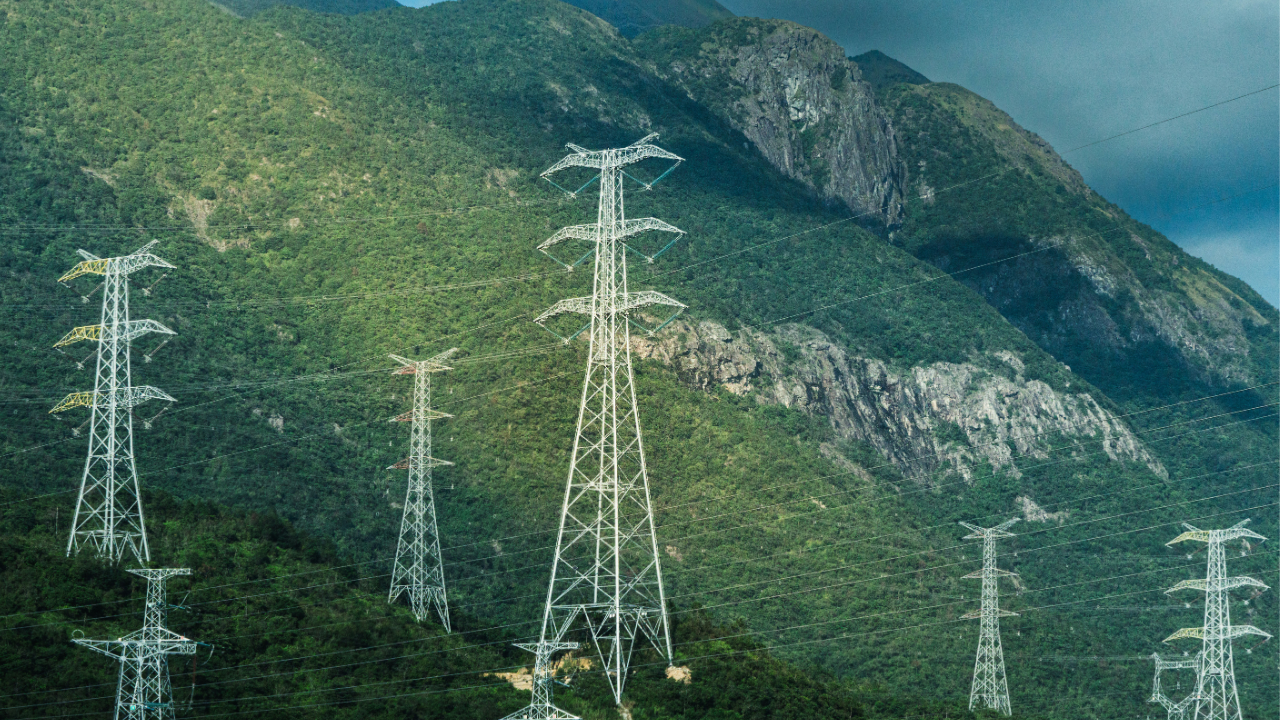
Hard infrastructure construction is China’s strength. But foreign entities have advantages in advanced programs like grid management software and smart meters. It is in these types of system infrastructure that non-Chinese companies could explore opportunities.
It’s not entirely a new challenge for China — having to do with the history of government intervention and overinvestment leading to overcapacity — but it is hard for Beijing to control. And it may not necessarily be unique to China, but the magnitude is larger and its external implications are serious when it comes to China’s overcapacity and the attendant cutthroat competition. The Chinese government has already stopped some of the incentive measures, but it’s not clear what will effectively resolve the situation.
There was a recent article in the Financial Times about BYD’s first-quarter profit this year being half of last year’s at around this time. Companies like BYD may ultimately need to find paths for survival beyond the domestic market. Developing economies have been benefiting from cheaper clean energy technologies from China. But there may be even more focus on setting up overseas production capacity, like BYD has, than trying to sell products abroad. That said, much remains uncertain for such paths to alleviating the overcapacity issue.
The demand destruction that we’re starting to see, especially in non-OECD economies, could affect the overall demand picture for China’s excess production capacity.
Generally speaking, if the war drags on, the global economy will weaken. So, the demand destruction that we’re starting to see, especially in non-OECD economies, could affect the overall demand picture for China’s excess production capacity.
Energy availability is one of the key components shaping AI competition between the United States and China. Science and technology capacity and strong human capital are also important ingredients.
China has its own strengths when it comes to energy. This is much more the story of having a massive electricity generation capacity from rapid expansion. There is a gap between where resources exit, or where power plants are, and where electricity needs are. But China’s “Eastern Data, Western Computing” initiative shows it clearly recognizes the challenge and wants to get ahead before energy availability gets in the way of pursuing AI leadership.
In the United States, natural gas is largely meeting AI data centers’ electricity needs today and underpinning the nation’s growing AI competitiveness. Thinking about the AI-energy nexus, abundance, affordability, and reliability are key energy attributes. But “clean” is another key attribute, and that’s what’s driving hyperscalers’ interest in nuclear energy — to help meet their growing electricity needs.
But perhaps more so in China, leaders may be paying close attention to potential environmental implications of a rapid buildout of data centers and AI use. They might be more sensitive about mitigating potential societal discontent that could generate pushback on data centers and AI. Remember the early 2010s when we started seeing Chinese citizens — especially the growing middle class — call for more qualitative improvements than simple, quantitative achievements from the country’s economic development? Choking air pollution had become a major problem and a big political headache. I would be surprised if Beijing has forgotten how these life quality-related concerns, if neglected, could complicate domestic stability.
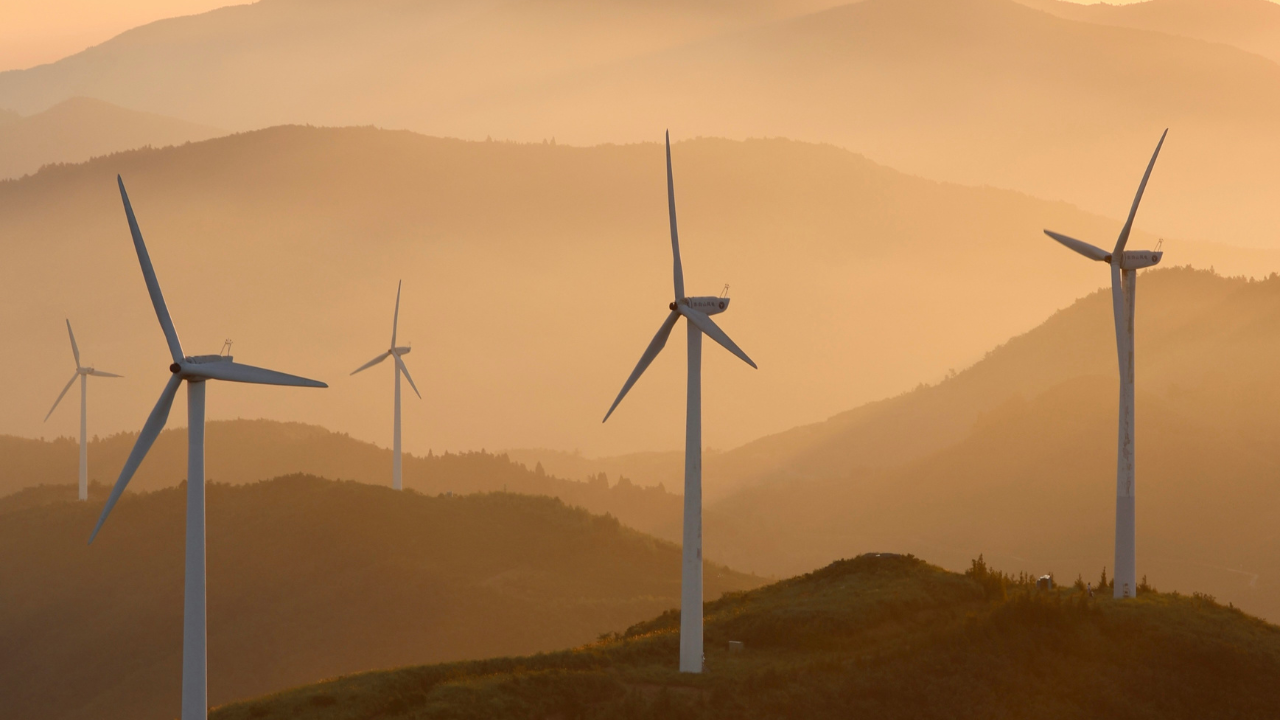
Some of the grid system-related software and sensors I mentioned earlier seem promising. Hydrogen may be another area. Chinese companies are, of course, working hard to develop green hydrogen production technologies like PEM electrolyzers. But Western companies may see opportunities in China, particularly over the next couple of years, as China’s hydrogen industry seems to enjoy more financial resources to continue developing hydrogen infrastructure. There, state-owned enterprises have been instrumental in building big hydrogen plants. And electrolyzer components are supplied by smaller, often non-state-owned enterprises from China. But there are competitive Western companies, from countries like the United States and Germany, that have partnered with Chinese entities for successful business.
Nuclear is a trickier one, as it’s more dual use in nature, but there are still foreign companies operating in this sector. China has been actively developing and building reactors, including advanced reactors like thorium molten-salt reactors. That makes China an exciting market for foreign companies.
I suspect that the strong emphasis on technology self-sufficiency, as seen in the 15th five-year plan, will mean a narrower scope for foreign companies’ participation.
There’s a whole catalog of things that China is still interested in acquiring from the West (i.e., the Chinese government’s Catalog of Encouraged Industries for Foreign Investment). China may be resistant to expanding engagement in certain sectors, but there are other sectors where China needs this engagement, at least in the short term. Overall, I suspect that the strong emphasis on technology self-sufficiency, as seen in the 15th five-year plan, will mean a narrower scope for foreign companies’ participation.
I also find it interesting that many Western governments are starting to adopt elements of China’s industrial strategy and practices. And China does not seem happy about this. Recently, China’s commerce ministry reportedly complained about the EU Industrial Accelerator Act for containing many measures, such as local content requirements and mandatory transfer of IP rights, that Western governments have long complained to China about.
I’m glad that you brought up this notion of national security. I think it’s now a bit overused. Threats to critical infrastructure are a national security matter. But threats to the US grid, for example, could come from various places, foreign or domestic. Vulnerabilities need to be remedied, or at least managed, regardless of the nature of threat.
So as not to stymie beneficial economic engagements while managing genuine national security concerns, more discipline is required to determine what really constitutes national security. That is very important for effective policymaking and rulemaking.
Energy and related technologies will continue to be part of leverage in trade negotiations.
I’m very interested in what comes out of the Trump-Xi summit. There may be much more openness to Chinese investments by the White House — more openness than some of the key voices in the Congress express.
Energy and related technologies will continue to be part of leverage in trade negotiations. During the first Trump administration, China committed to purchasing US energy commodities to reduce the bilateral trade deficit. Fast forward, I think that China could still see value in making a similar commitment. For example, US LNG has no destination restrictions like other LNG supplies. That said, how much economic interdependence China would want with the United States is a good question.