Member Exclusive
Unraveling China’s Consumption Knot
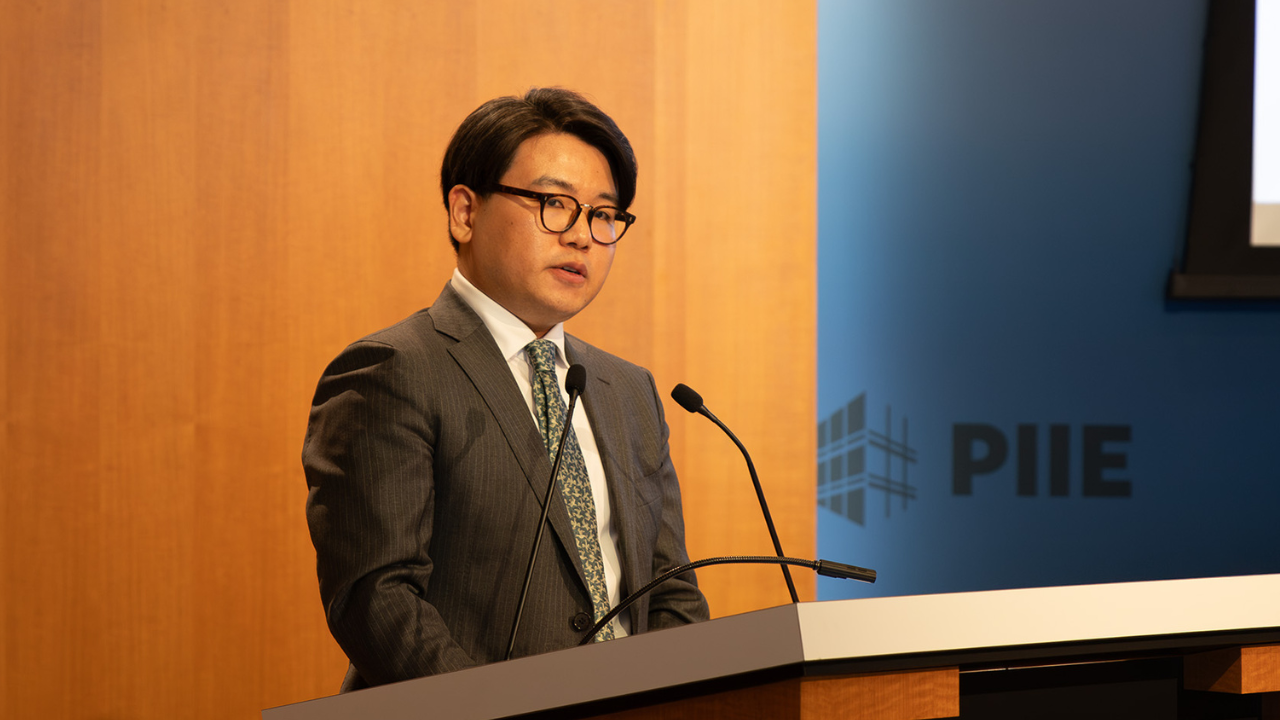
Tianlei Huang is a senior fellow at the Peterson Institute for International Economics (PIIE). His research focuses on the Chinese economy. His forthcoming book, “China’s Fiscal Reckoning in the Shadow of the Housing Bust,” examines the implications of China’s housing crisis for government finances. Huang also manages PIIE’s China-related activities and co-organizes a bimonthly seminar series on US-China economic relations with China Finance 40 Forum.
I’m not particularly worried about the housing bubble coming back because two of the fundamental conditions that fueled it in the past have changed quite dramatically.
First, real interest rates are much higher than they were in the two decades before the housing market peak in 2021. Back then, real rates were often very low or even negative. Bank deposits effectively carried an implicit tax, which pushed households to move their savings into housing. That dynamic no longer holds. Even though the PBOC has cut nominal rates several times in recent years, falling prices in China keep real interest rates elevated. With higher real interest rates, housing prices tend to see weaker growth or even decline. That’s exactly where China is today.
Second, household expectations have shifted. During the boom years, people were confident that incomes would keep rising, which sustained nonstop increases in housing prices. Now, income expectations have deteriorated sharply, and that has fundamentally changed buyer behavior.
Unless these two forces are reversed, it’s very difficult for a new housing bubble to form or even for the market to stabilize meaningfully.
What you’re describing is a key pillar of Beijing’s supply-side strategy to speed up the rebalancing of the housing market. In theory, having local governments and state-owned firms buy excess inventory and convert it into affordable housing makes sense. In practice, it hasn’t worked very well.
To support this effort, the PBOC launched a special lending facility in early 2023 and later expanded it, offering very cheap funding to banks that lend to local state firms to purchase unsold homes and turn them into public or affordable housing, either for rent or for sale. But take-up has been extremely limited.
Most of the unsold housing is in lower-tier cities, where demand for affordable housing is quite weak and population outflows are common.
The main reason is the geographic mismatch you mentioned. Most of the unsold housing is in lower-tier cities, where demand for affordable housing is quite weak and population outflows are common. Even if local governments buy these units, they may struggle to find tenants or buyers later on. Meanwhile, demand for affordable housing is strongest in first-tier cities, but those cities don’t have much excess inventory for governments to acquire. The policy only works in a narrow set of second-tier cities where surplus supply and demand overlap.
A second constraint is financial viability. Rental yields in most Chinese cities are still too low to cover financing costs, even with subsidized credit. That means projects only work if homes are bought at very deep discounts or if local governments provide sizable subsidies. But developers are likely unwilling to sell at steep discounts, and local governments, whose revenues have sharply declined amid the property slump, don’t have the fiscal space to step in now. On top of that, with prices still falling, local state firms have little incentive to buy now rather than wait for lower prices later.
Before getting to the affordability problem, it’s worth noting that price-to-income ratios across city tiers have been improving since the market peaked. This correction was long overdue, and for young people in particular it’s good news. During the boom years, especially in major cities, high housing costs were a major factor discouraging young couples from having children. So improved affordability may end up being positive for fertility over time.
That said, affordability in top-tier cities remains a real challenge. There are some structural factors at play, which are difficult to reverse.
First, supply in top-tier cities has been tightly constrained while demand remains strong. Beijing has long pursued a strategy of “balanced urbanization,” encouraging growth in smaller cities while capping the expansion of megacities. Population caps and tight land-supply quotas have been imposed in all four tier-one cities. The rationale is fiscal — concerns about the cost of public services and infrastructure — and political, including fears of congestion, slums, and social instability. But the result is chronic undersupply in the cities where people most want to live.
Second, rising income inequality has pushed prices further out of reach for average households. In cities with widening income gaps, higher-income households have far greater purchasing power and can bid up prices. That dynamic is certainly present in China’s largest cities.
Owning a home provides much better access to public services than renting, and that institutional feature gets factored into housing prices.
Third, high price-to-income ratios in top-tier cities also reflect a premium for access to better public services. The best schools and hospitals in the country are concentrated in these cities, and access is often tied to local hukou and homeownership. While some migrants can obtain local hukou without buying property, their children often still face barriers to equal access to education. Owning a home provides much better access to public services than renting, and that institutional feature gets factored into housing prices.
Land supply in China’s top-tier cities should increase to meet the increase in genuine housing supply demand. To achieve this without encroaching further on scarce arable land, supply in cities seeing population declines should be reduced. Beijing needs to recognize that Chinese people overwhelmingly prefer to move to the major urban clusters around tier-one and tier-two cities, rather than smaller and sleepy tier-three cities that it has tried to steer them toward. Encouragingly, there appear to be some signs that the central government is beginning to rethink its land quota allocation regime. At the Communist Party’s Third Plenum in July 2024, party leadership explicitly mentioned the idea of “establishing a mechanism to coordinate the allocation of new urban construction land quotas with the increase in resident population.”
In addition, since 2015, Beijing has piloted a program allowing rural construction land owned by rural collectives in dozens of county-level jurisdictions to be traded in the same way as state-owned urban land plots owned by local governments. If implemented nationwide, this reform would be potentially transformative. It would break the state’s longtime monopoly on land supply and expand overall land supply, while providing rural residents with a new form of property rights and additional income. Yet it could also push land prices down and deepen the fiscal strains of local governments already struggling with declining land sales amid the property downturn. In the end, balancing these different objectives will be a delicate task for Beijing.
Let me briefly explain what the whitelist mechanism is. Beginning in 2022, as many developers ran into severe liquidity problems, construction on a large number of pre-sold housing projects stalled. Homebuyers were still paying mortgages, but their homes were not being delivered. In response, Beijing launched the “Bao Jiao Lou” or “guaranteeing delivery” campaign at the July 2022 Politburo meeting.
The key point [of the whitelist mechanism] is that the support is directed at individual housing projects, not at developers themselves.
Under this framework, authorities created a project-based whitelist mechanism. The key point is that the support is directed at individual housing projects, not at developers themselves. Banks are encouraged to lend to unfinished projects on the whitelist, and the funds can only be used to complete construction, not to repay developers’ other debts. Beijing has deliberately avoided outright developer bailouts, largely because of moral hazard concerns.
To support this effort, the PBOC in December 2022 launched a loan facility with a 200-billion-yuan quota, providing zero-cost funding to the six largest commercial banks so they could lend to whitelist projects. But despite the attractive terms, banks were reluctant to participate. Rising non-performing loans tied to real estate, together with shrinking net interest margins, made banks increasingly cautious. As a result, take-up was very limited. By the end of the third quarter of 2024, only 12.7 billion yuan, about 6% of the quota, had been drawn. That is tiny compared with some private sector estimates that completing all unfinished pre-sold homes could require at least 3 trillion yuan.
To break this logjam, Beijing introduced a new city-level real estate financing coordination mechanism in early 2024. Local governments, together with housing regulators and financial authorities, now compile project whitelists and recommend them directly to local bank branches. These recommendations do not carry explicit government guarantees, but the idea is that local authorities have better information about project conditions and can reduce information asymmetry. Political pressure from local governments also plays a role in nudging banks to lend.
This adjustment has helped somewhat. By late August 2024, banks had approved loans for more than 5,300 projects, totaling nearly 1.4 trillion yuan, according to the Ministry of Housing and Urban-Rural Development. However, estimates suggest that roughly two-thirds of these approvals were rollovers or restructurings of existing loans, with only about one-third being new funding. Many banks remain cautious about extending fresh credit to projects that, while technically on the whitelist, still face weak sales prospects and uncertain cash flows.
Obviously, industries ranging from raw materials like cement and steel to furniture, home renovation, and elevators are all under severe strain. For many private business owners, this downturn has been existential, not just for their companies but personally. A tragic case is Wang Linpeng, the chairman and CEO of Easyhome, China’s largest home furniture retailer, who reportedly died by suicide in July 2025. His death came amid collapsing revenues and rising debt at his company, and he was the fourth private entrepreneur to take his own life in just four months. Several of these cases involved business leaders in sectors downstream from real estate.
More broadly, the housing bust sits at the center of China’s current economic malaise. Since mid-2023, China’s nominal GDP growth has fallen below real GDP growth, showing economy-wide deflation driven by weak domestic demand and persistent excess supply. Private consumption initially held up after the COVID reopening largely thanks to the government’s consumer subsidies, but as the effect of these subsidies has gradually faded, a negative wealth effect from falling household housing assets has increasingly weighed on consumer spending. Private investment has contracted, mainly because of the slump in real estate development, while non-property private investment has continued to grow. State-led investment supported growth early in the reopening but slowed markedly in 2025. On the supply side, industrial overcapacity and intense competition keep pushing prices down. Much of this excess capacity has been absorbed through exports.
From a savings-investment perspective, the housing crisis is a major driver of China’s growing external imbalance.
With falling export prices and an undervalued currency, China’s export machine has remained remarkably strong, and the economy has become reliant on external demand to meet Beijing’s annual growth targets. Together with weak import demand, this has pushed China’s trade surplus to record levels in recent years. From a savings-investment perspective, the housing crisis is a major driver of China’s growing external imbalance. Household investment, largely housing purchases, has fallen sharply since the market peaked, while household savings have risen. That shift has pushed up China’s overall savings-investment imbalance and contributed to rising trade tensions abroad, what some observers describe as a “second China shock.”
That said, unlike the United States in 2008, China has not experienced a financial crisis, at least not yet, despite mounting pressures from the housing downturn and the broader economic slowdown on the financial system. This resilience is owed in part to the high mortgage down payments during the boom years, as well as the government’s proactive measures to dispose of bad assets, recapitalize banks, and strengthen the financial safety net. China’s financial policymakers have clearly drawn lessons from other countries’ experiences in managing the fallout of housing crises. That said, with some forbearance policies still in place, some bad assets are likely being hidden, and the true scale of losses may not be fully recognized yet.
If these measures have any impact at all, it will likely be quite marginal. On their own, mortgage subsidies or tax rebates aren’t enough to meaningfully revive housing demand. What really matters is whether real interest rates can come down and whether household expectations, especially about income and job prospects, can recover in a sustained way. Without progress on those fronts, it’s hard to see demand picking up in a meaningful or lasting manner.
A nationwide property tax was clearly on the Chinese leadership’s agenda before the housing market peaked. It appeared in major policy documents, and in 2021, Beijing even authorized pilot programs. But that push stalled quickly. In 2022, the finance ministry put the pilots on hold, and since then the topic has largely disappeared from official statements.
Introducing a property tax now would likely put additional pressure on prices and demand, which could worsen local government finances rather than fix them.
The biggest issue is timing and feasibility. The housing market is still weak, and introducing a property tax now would likely put additional pressure on prices and demand, which could worsen local government finances rather than fix them. There’s also strong resistance from wealthy homeowners, local officials, and developers, and public acceptance is far from guaranteed. Many households are asset-rich but cash-poor, especially in big cities where price-to-income ratios remain high. A recurring property tax would be very sensitive politically.
So, while a property tax makes sense in theory as a more sustainable revenue source, in practice it’s hard to see a nationwide rollout happening anytime soon. If it does move forward, it’s more likely to start cautiously, with low rates, narrow coverage, and lots of exemptions, rather than as a broad, revenue-raising tax.