China Provisions in the House and Senate NDAA Drafts
The National Defense Authorization Act (NDAA) for 2027 is coming into focus after the House and Senate armed services committees advanced their versions of the bill earlier this month.
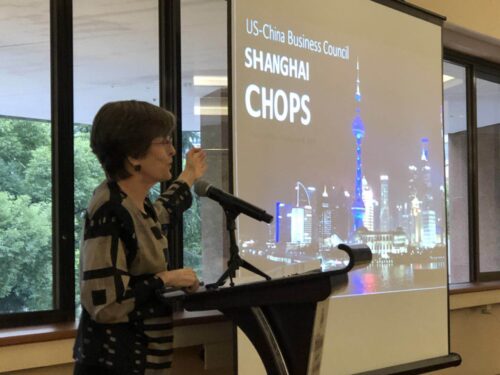
On behalf of all of us at the US-China Business Council, we would like to thank our member companies for their generous support of USCBC’s Shanghai CHOPS Conference 2017, held on November 30th at the Shanghai Hilton. The Shanghai China Operations (CHOPS) is an annual conference that brings together a range of business and policy experts to discuss important operating and policy developments affecting business in China. The event also provides a valuable opportunity to network with executives from USCBC member companies.
USCBC 2017 China Business Environment Member Survey
The US-China Business Council has released the key findings of its 2017 Annual Member Survey. For the past 12 years, USCBC has polled its members on their business performance in China and their priority issues.
IT Solutions: Improving Efficiency, Accuracy and Transparency in Payroll Processing in China
The digitization of business functions is not a new phenomenon, particularly in developed economies. However, the adoption of technology for HR and payroll processes in developing countries such as China is far less common. Arguably, it is in these countries where such IT solutions are the most needed, and could have the greatest transformative effect on business operations. Although China is rapidly developing into a mature economy, the HR and payroll processes of many companies operating in the country are still paper-based or recorded on rudimentary Excel spreadsheets.
Healthcare Series Part 2: New Bidding and Tendering Law Promising for Healthcare Companies, If Implemented
Chinese regulations on tendering and bidding practices published by the Ministry of Finance (MOF) in July are a promising sign for US pharmaceutical and medical device manufacturers that government procurement behavior will be better regulated to guarantee consideration of quality alongside price. However, true improvement for the industry will require regulators to faithfully implement the law and refrain from unofficial practices such as local favoritism, which sometimes plague procurement processes.