USMCA Is Not Renewed. It Is Also Not Over.

Bill Russo is the Shanghai-based founder and CEO of Automobility Limited, a strategy and investment advisory firm helping its clients to build and profit from the future of mobility. His industry experience includes 15 years with Chrysler, where he was regional head of Northeast Asia. He has also worked with IBM and Harman. Russo advises multinational and local Chinese firms in the formulation and implementation of their global market and product strategies.
The number is always misleading because you’re counting brands, not viable companies, and some companies have multiple brands. There were hundreds of new energy vehicle manufacturing entrants, but fewer than 40 matter, and 10 companies get 80% of the market. It’s a typical startup period where it’s a land grab. Companies get started, but they don’t make the final cut. And there’s a set of criteria that you need to meet if you’re going to compete in a market this competitive.
First, you’ve got to make your product affordable. You need access to a battery supply chain. Three-quarters of all the EV batteries made in the world are made in China, so they have scaled that supply chain. If you don’t have access to that, you’re not going to deliver an affordable enough EV to compete in a hyper-competitive market.
China has moved beyond EV adoption into what I call the “2.0 era,” where competitiveness is defined by software architectures, central computing architectures, driver-assisted and AI capabilities, physical AI, and data integration.
But more important, you need the core electronics, and you need the software relevancy. China has moved beyond EV adoption into what I call the “2.0 era,” where competitiveness is defined by software architectures, central computing architectures, driver-assisted and AI capabilities, physical AI, and data integration. That’s where Chinese companies really stand out. Companies that focus primarily on electrifying the powertrain without taking the step to 2.0, which is the intelligent connected vehicle, are most likely to be eliminated. And many legacy automakers outside China fall into that category today because you can only see this 2.0 era today reaching scale in China.
It’s difficult to imagine a scenario like that; they are considered too big to fail. They would probably be helped in a manner not unlike the US stepping in to help GM during the global financial crisis. Companies that are backbone employment agents and a pillar to the economic health of both the nation and the municipality or the provincial authorities are going to get help. They aren’t necessarily the most competitive organizations, but five to seven national-scale original equipment manufacturer (OEM) groups would fall into that category. And there are more than five to seven out there.
More than likely. Many state-owned companies were built for the traditional automotive era and have had to reinvent themselves for the intelligent connected vehicle era. But because it’s China, ecosystems will be formed to give them what they lack. So, if you’re not born with the DNA of a company that knows how to make a software-defined or intelligent connected vehicle, no problem. Work with Huawei, and they can provide that for you. They are what we call the tier-0.5 ecosystem orchestrator for integrating these high-tech solutions that require software stacks, electronics, advanced architectures, AI, and data.
That’s a flaw in the way the Western auto industry has architected itself. It wants to create individual islands of competitive companies. We don’t necessarily cross the capabilities or integrate them in a very efficient way. In this era of the intelligent connected vehicle, you need to have the manufacturing company that knows how to scale and assemble products and components, but you also need the high-tech companies providing an assist to integrate the more complicated high-tech software-based systems.
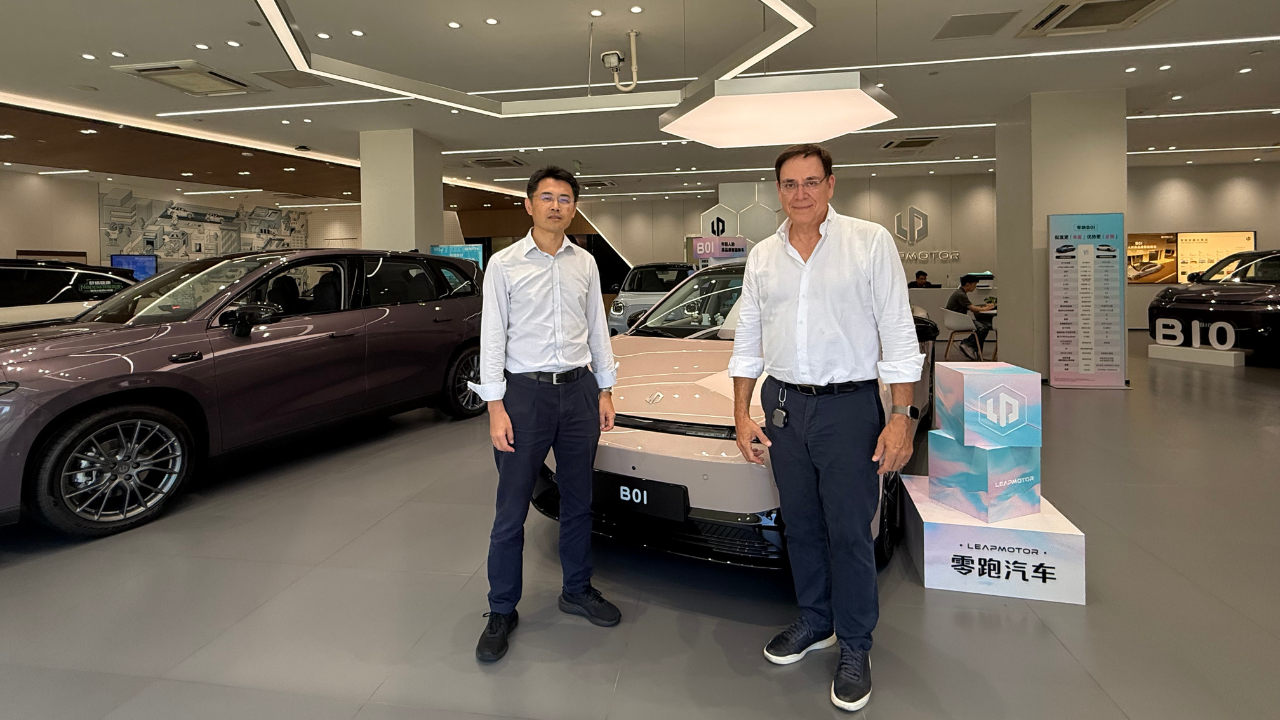
It’s easy to fall into the trap of saying that what’s happening with China is equivalent to what happened in the late 20th century with the Japanese, starting with Toyota, and then the Koreans that came a decade or so later with a value proposition of smaller fuel-efficient cars. But from a product architecture standpoint, there wasn’t a discontinuity. They took a category that was deprioritized by the US and leveraged a supply chain and cost structure advantage.
You could say the parallel, if there is one, is China was the low-cost country for scaling the hardware side of the business, and as it goes global, it will bring the value proposition of economies of scale for manufacturing and supply. That will be its advantage. But to say that it’s only that, to say it’s equivalent to Japan and Korea is incorrect. Because what China has done is create a discontinuity in terms of the product architecture. They’ve added a user-centric product — they’ve turned the car into a smartphone on wheels.
When you get in a Chinese car, you immediately understand that it has far more user interface (UI) and software-defined user experience (UX). That UI and UX really differentiate it as a product. And they can do all that with the scale of China working for it, which means it doesn’t cost an exorbitant amount of money when sold. When you can take the affordability and add the UI and UX on top, you’ve got a winning formula.
One of the main reasons people in the United States hesitate to adopt EVs is affordability. Number two is we don’t have the infrastructure to charge them. From a practical standpoint, consumer demand is based on rational choices. China has solved both problems. They’ve invested in infrastructure, and they’ve super-scaled the most expensive component, the one that most automotive OEMs said they couldn’t figure out — how to get the energy, the cost per kilowatt hour, down to the level where it can compete with internal combustion engine powered vehicles. We can benefit from learning how they did that and accessing some of those capabilities for ourselves.
There’s a perception that if you just flip the script and do what China did, which required a JV manufactured car, we’ll all be happy. A traditional equity JV is not going to solve all the problems because it’s just about the manufacturing of the hardware. But what we’re talking about is access to the tech. It’s admitting that there’s a technology gap, and part of that is batteries.
American companies need access to a supply chain at scale that allows us to build competitively priced products that can compete not just in the United States but in international markets.
The United States does not yet have a battery supply chain at the scale China has built, and whether it’s lithium, graphite, or nickel, China processes those at scale and can produce a battery at a cost competitive price.
American companies need access to a supply chain at scale that allows us to build competitively priced products that can compete not just in the United States but in international markets. We need ecosystem alliances with US tier ones, and we need to create a layer that integrates the technology that is then compliant with national security regulations. And those national security regulations not only involve where you manufacture things but also require that the software architecture complies with data and national security requirements at the local level.
Chinese companies will follow whatever policies we dictate. But we shouldn’t open the door and say, come and have it. The price of entry is sharing and licensing and taking inspiration from some of these new product architectures — this could be in the form of technology agreements and joint ventures to produce the core components needed in the new generation of automobile.
They will go everywhere else, and that’s exactly what they’ve done. And they’re bringing an architectural and structural advantage that the US OEMs lack. So, if we care about competing, and not just in the United States, we should recognize that simply blocking the US market may help them go global everywhere else even faster.
The idea that trade protection alone can restore 21st-century global automotive leadership is a fallacy.
Chinese auto manufacturers are already in Latin America. They’re all over Europe, with double-digit market shares. They’ve got single-digit, soon-to-be double-digit, in the Middle East. They’ve got about 15% to 20% market share in Australia. The UK is opening to Chinese-branded vehicles, and a lot of them are EVs. So, the world is moving on.
The idea that trade protection alone can restore 21st-century global automotive leadership is a fallacy. It’s not going to happen. The frustration is that you don’t control all the boundary conditions.
In China, Tesla had a wonderful advantage, but they’ve been losing market share there because they struggle to keep up with the pace at which Chinese companies iterate and bring new products to the market. Tesla’s core products — the Model 3 and Model Y introduced in 2020-2021 — are still the backbone of its lineup, while Chinese competitors iterate much faster. Ford and GM are minimally competitive in niche segments in China today because they haven’t been able to keep up with the pace of innovation that’s coming from Chinese companies.
There are so many things you don’t control, but there are three boundary conditions that are not met. First, policy stability to support investment and supply chain localization. From one administration to the next, everything changes. How do you invest in that environment? You don’t — you just sit on the side and say, “I’ll wait until things stabilize.”
Second is platform thinking. Fewer bespoke vehicles, more scalable architectures. We don’t have that. We think in traditional automotive industry product cycles, and we race to whatever we think is the most profitable on a per unit margin product.
And third, closer alignment with tech ecosystems around AI, semiconductors, and automation. Again, the gap between Detroit and Silicon Valley is wide. You’re in the same country, but you’re thousands of miles apart literally and even further intellectually, so the United States needs to bring the brain of the high-tech revolution to the auto sector.
Global automakers’ biggest blind spot is treating electrification as the disruption. It’s intelligence and connectivity.
I went to a conference in Detroit last fall. The discussion was EV or not EV. But how is not EV an option? China’s proven that it’s feasible. They’re going global with it. The United States will be an island of combustion engine-powered vehicles built by companies that won’t be able to compete outside because the rest of the world will have been ceded to the next generation, the 2.0 definition of the car.
And worse, if we don’t take the 2.0 step, how are you going to get to 3.0, the AI and robotics era? 3.0 is where the game is going to ultimately be. To me, that’s the final act of this three-act play. It’s when the car becomes a robot. And you don’t get that with a 20th-century product architecture. If you’re relying on combustion engine-powered vehicles, good luck turning that into a high-tech computer.
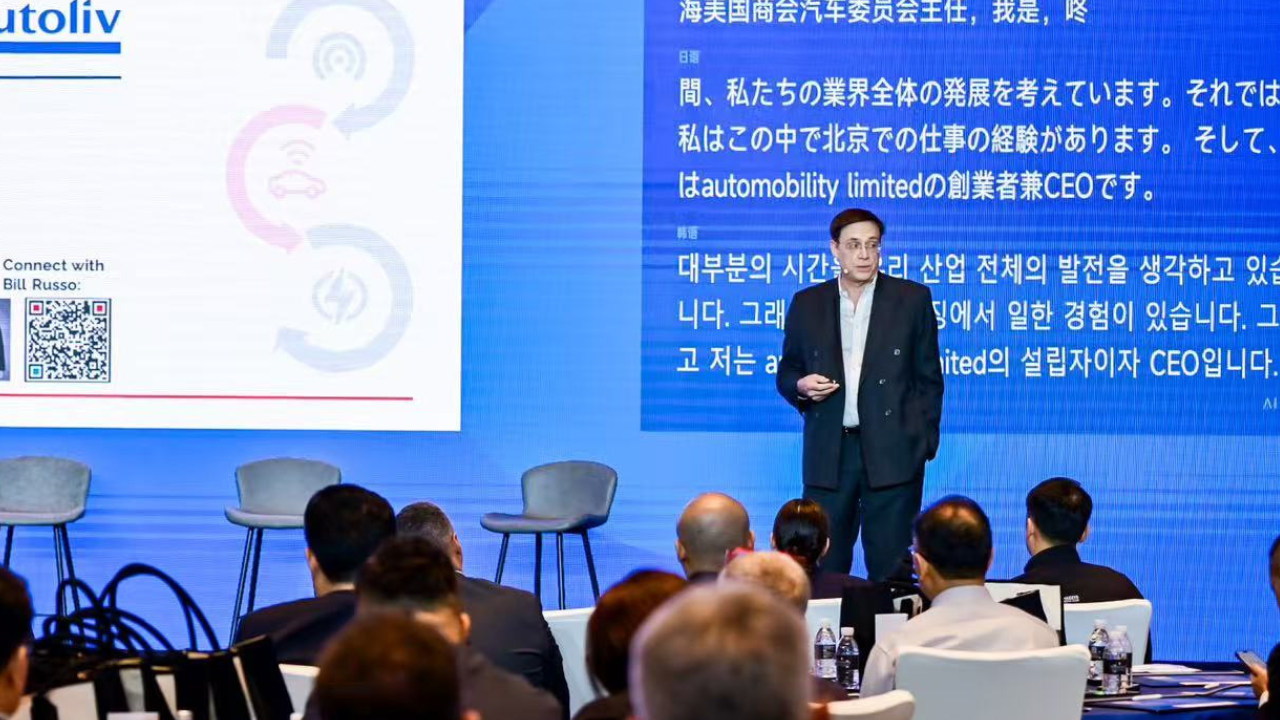
The thing about China is they say what they’re going to do before they do it. And they don’t hide it. It’s in the press. It’s been there since the 10th five-year plan, and we’re moving into the 15th. They’ve stayed very consistent. The number one thing is policy stability. Different presidents may have different proclivities, but they don’t tear up the whole thing and start over again.
China will bridge for as long as needed to gain competitive advantage. If it’s in the interest of the country’s economic health in the long run to be competitive in a sector, then there’s no limit apparently to the amount of public support that they’re willing to give through the transition period. There’s simply no appetite in the West to take a 20-year journey to reinvent an industry.
Aptiv is a great example of a technology company doing pretty well in China. Magna, a Canadian company, has done well too. Their business in China has pivoted significantly to being partners with some of the Chinese companies as they go global. Aptiv’s business with local Chinese companies has increased because they learn to speed up their own development clock and build relevancy into the new ecosystems that are being formed in the supply chain.
The advantage of American companies or non-Chinese companies is they’re global already. So, the Chinese companies want to tap some of their expertise in developing solutions that can be sold internationally and homologated at the local level to local market requirements. But more importantly to the foreign companies doing business in and with China, they want to speed up their development cycle to work at the speed of the internet economy, which is what we see in China. In China, there’s no separation between information and communication technology companies — think Huawei and Xiaomi — and automotive. They’re directly engaged in building the next generation of high-tech automobiles. Again, we need that fusion of domains to happen in the US auto industry.